




10 Screen Printing Equipment Manufacturers Compared by Application
This 2026 guide profiles ten screen printing equipment manufacturers and brands: Winshol (China), ATMA Champ (Taiwan), M&R Printing Equipment (United States), MHM (Austria), ROQ (Portugal), Anatol Equipment Manufacturing (United States), Sakurai Graphic Systems (Japan), SPS TechnoScreen (Germany), THIEME (Germany), and Systematic Automation (United States).
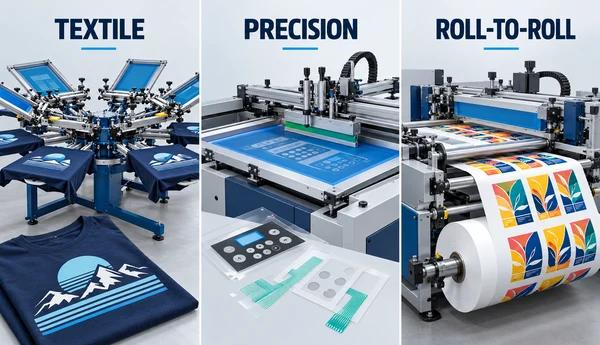
The companies are grouped by the machine formats relevant to different buyers: roll-to-roll and label printing, textile presses, and precision or industrial systems. Some manufacturers serve more than one group. Winshol publishes this guide and appears first. Numbering is editorial order, not an independent ranking, a performance score, or a ranking by size or revenue.
Quick Comparison of the Top 10 Screen Printing Machine Manufacturers
If you have two minutes, this table is your shortlist.
| Manufacturer | Country / base listed in this guide | Configuration examples | Application to evaluate |
|---|---|---|---|
| Winshol | China | Roll-to-roll, CCD, cold foil and sheet-fed | Labels, packaging and films |
| ATMA Champ | Taiwan | CCD/sensor roll-to-roll and flatbed | Films and industrial substrates |
| M&R Printing Equipment | United States | Carousel and oval textile presses | Garment printing |
| MHM | Austria | Carousel textile presses | Textile printing |
| ROQ | Portugal | Pallet-based automatic textile presses | Textile printing |
| Anatol Equipment Manufacturing | United States | All-electric VOLT and other press families | Textile printing |
| Sakurai Graphic Systems | Japan | Cylinder, roll-to-roll and flatbed | Process-specific sheet or web printing |
| SPS TechnoScreen | Germany | Cylinder and STOP-cylinder families | Print finishing and industrial sheets |
| THIEME | Germany | Shuttle-table, rotary-gripper and roll-to-roll | Industrial sheets and flexible webs |
| Systematic Automation | United States | F1 semi-automatic press with options | Flat products and optional part tooling |
Manufacturer product pages and catalogues are the sources for the configurations described below, checked on 10 October 2026. They describe supplier-listed equipment, not results from a comparative performance test. Confirm current availability, supplied options, destination requirements and a project-specific quotation before ordering. For material-format selection, see our panduan mesin lembaran versus roll-to-roll.
Shortlist by Job
Use this table to match the job to a machine format before comparing brand names. The links are starting points for a configuration review, not a substitute for a material trial or a project-specific quotation.
| Buyer job | Format to compare first | Winshol starting page | Catalogue notes |
|---|---|---|---|
| Labels, packaging or films supplied on a continuous web | Sablon roll-to-roll | Roll-to-roll screen printing machines. For one screen color with UV-curable ink, start with the mesin sablon UV WL-350D | The WL-350D UV is listed as a single-color roll-to-roll configuration with a two-lamp UV dryer, a 350 mm maximum web width, a 330 × 450 mm maximum print area and a 450 mm maximum feed length. These are catalogue limits, not a job-specific output or registration guarantee. |
| Sheet-fed industrial or overlay work | Sheet-fed screen printing | Request a review on the contact page if the job is supplied as individual sheets. If the material is actually a continuous web, use the roll-to-roll category instead. | Sheet-fed and roll-to-roll configurations are not interchangeable. Do not treat the WL-350D UV web limits as sheet-fed specifications. |
| Garment or textile printing | Automatic textile presses (carousel, oval or pallet) | This guide’s textile group (M&R, MHM, ROQ and Anatol) is the relevant shortlist. Winshol does not present a textile-press starting page here. | Textile presses and industrial roll-to-roll or sheet-fed lines serve different substrates and handling methods. |
| Ready to request a quotation | Project-specific configuration review | Hubungi Winshol | Share the substrate, format, print area, color count, ink and drying route, and destination so the proposed scope can be reviewed. |
Numbering elsewhere on this page is editorial order, not an independent ranking or a performance score.
To compare current Winshol roll-to-roll configurations, open the mesin sablon roll-to-roll kami category. For a single-color UV starting point, review the mesin sablon UV WL-350D. For individual sheets, compare sheet-fed screen printing machines. For a custom configuration or sample review, see the OEM/ODM project process before sending your brief.
How We Selected These 10 Manufacturers
This shortlist is drawn from the manufacturers’ own published product information. When you compare a configuration, check these five points:
- Feed format and material-handling limits for the exact model.
- Printing, curing, finishing and inspection modules in the quoted scope.
- Current quality-system documents and applicable product-compliance documentation.
- Installation, training, spare parts and support arrangements for the destination.
- Documented sample testing against the buyer’s acceptance criteria.
The manufacturers are grouped by specialty. Winshol appears first because it publishes this guide. Numbering is editorial order, not a comparative score.
Roll-to-Roll & Label Screen Printing Specialists
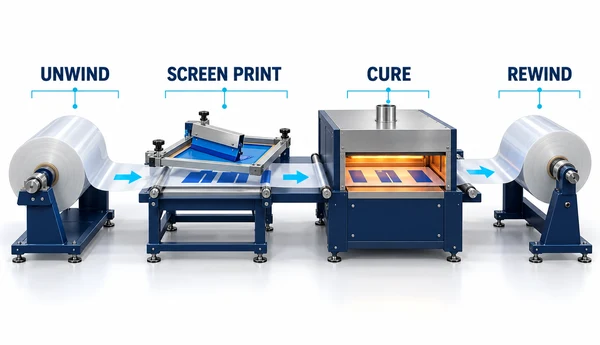
Roll-to-roll screen printing moves flexible material through printing and the specified drying or finishing modules. The right line depends on the film or label construction, the print repeat, the registration requirement and the downstream handling. Both entries below include roll-to-roll equipment. Compare the exact configuration, not the category label.
1. Winshol (China)
Application to evaluate: Label, packaging and film production with project-specific roll-to-roll or sheet-fed configuration.
Winshol is the brand of Guangzhou Winshol Tech Co., Ltd. and shares its Dongguan manufacturing operation with Dongguan Wangle Precision Machinery Co., Ltd. Its range includes roll-to-roll screen printing, CCD registration, cold foil, drying, web handling and sheet-fed equipment. Project enquiries are welcome from Europe, North America, the Middle East, South America and Asia; configuration, documentation and service arrangements are confirmed for each project.
The current WL-350D UV dan WL-350DW cold-foil product pages list a 350 mm maximum web width and 330 × 450 mm maximum print area. The WL-5080CCD page lists a 520 mm maximum web width and 500 × 800 mm maximum print area. For label and film lines, start with Winshol’s roll to roll screen printing machines category, then review the WL-350D UV single-color configuration. These are model-specific limits, so 450 mm should not be treated as the maximum width of the Winshol range. The WL-5070PZ is sheet-fed, with a listed 500 × 700 mm maximum print area.
Refer to Winshol’s company and manufacturing information for the shared factory relationship and certificate scope. Request current documents identifying the holder and applicable models, and agree sample-test scope, costs and acceptance criteria before testing.
2. ATMA Champ (Taiwan)
Application to evaluate: Roll-fed films requiring CCD or sensor registration, and selected flatbed applications.
ATMA’s roll-to-roll range includes the ATMALINE RR3250-C with CCD registration and the RR5060/S with sensor registration. The published configurations combine unwinding, printing, drying and winding, but registration and material-handling specifications differ by model. ATMA also offers flatbed systems. Select the process and automation level for the specific job.
Manufacturer source: ATMA product information. See also RR5060/S sensor-registration line.
To compare current Winshol roll-to-roll configurations, open the roll-to-roll screen printing machine category. For a single-color UV starting point, review the mesin sablon UV WL-350D.
Textile Screen Printing Manufacturers
The next four manufacturers offer automatic textile screen-printing presses. Compare pallet or carousel layouts, color and station requirements, flash curing, operator loading and the utilities required by the selected model.
3. M&R Printing Equipment (United States)
Application to evaluate: Garment-printing jobs evaluated for a carousel or oval press.
M&R's textile screen-printing range includes the GAUNTLET 4 carousel press and the STRYKER oval press. GAUNTLET 4 uses electrically driven printheads. STRYKER supports single or double indexing for cut-piece and all-over garment printing.
Manufacturer source: M&R product information.
4. MHM (Austria)
Application to evaluate: Textile-printing jobs evaluated for a carousel press and setup-recall options.
MHM offers carousel screen-printing presses, including S-Type Xtreme and Synchroprint 5000. Synchroprint 5000 has tablet-based control and an optional GOTO registration and job-memory system for recalling previous setups.
Manufacturer source: MHM product information. See also S-Type Xtreme brochure.
5. ROQ (Portugal)
Application to evaluate: Textile-printing jobs evaluated for pallet-based automatic presses.
ROQ's ROQ YOU is an automatic textile screen-printing press with pallet-based configurations and central machine controls. It has electrically driven squeegee movement, adjustable print and flood settings, and optional flash-cure connections.
Manufacturer source: ROQ product information.
6. Anatol Equipment Manufacturing (United States)
Application to evaluate: Textile-printing jobs considering an all-electric VOLT configuration.
Anatol's automatic screen-printing range includes VOLT, VECTOR, TITAN and INFINITY Oval presses. The all-electric VOLT family uses servo indexing and lift, electric printheads and touchscreen controls. It operates without an air compressor.
Manufacturer source: Anatol product information.
Precision & Industrial Screen Printing Specialists
The entries below cover sheet, flatbed, cylinder or roll-to-roll systems for industrial printing. Their product ranges overlap, so shortlist from the named model and the job requirements, not from the category alone.
7. Sakurai Graphic Systems (Japan)
Application to evaluate: Jobs requiring a comparison of cylinder, roll-to-roll and flatbed formats.
Sakurai Graphic Systems offers MAESTRO A and SD stop-cylinder screen presses, MS-DDS servo-driven cylinder presses and MSDR roll-to-roll cylinder presses. The lineup also includes the MAESTRO MF-80VII flatbed press with a detachable feeder, so buyers can compare sheet-fed and roll-fed process options.
Manufacturer source: Sakurai Graphic Systems product information.
8. SPS Technoscreen (Germany)
Application to evaluate: Print finishing and industrial sheet-printing jobs.
SPS TechnoScreen offers ASTRON QX and VITESSA XP/SL cylinder screen presses. The VITESSA models use STOP-cylinder technology. The VITESSA XP range covers print finishing and industrial sheet applications. The XP57 primeline is paired with an FP feeder for uses including plastic cards, textile transfers and printed electronics.
Manufacturer source: SPS TechnoScreen product information. ATMA describes an ATMA–SPS strategic partnership. These entries should not be read as wholly unrelated manufacturing operations.
9. THIEME (Germany)
Application to evaluate: Industrial applications requiring sheet handling or flexible-web processing.
THIEME's screen-printing range includes the 3000 shuttle-table machine with automatic take-off, the fully automatic 5000 rotary-gripper system and the 6000 PE roll-to-roll line. The 6000 PE handles flexible roll materials for applications including printed electronics, with camera alignment and optional hot-air, UV or IR drying.
Manufacturer source: THIEME product information.
10. Systematic Automation (United States)
Application to evaluate: Flat-product jobs evaluated for a semi-automatic press and optional tooling.
Systematic Automation's F1 is a semi-automatic, pneumatically operated screen printer for flat products, with an adjustable print stroke and foot-pedal cycle start. Optional cylindrical-printing tooling and a vacuum table allow the press to be configured for additional part shapes and substrate-handling needs.
Manufacturer source: Systematic Automation product information.
Other Notable Screen Printing Machine Manufacturers
Other brands may appear in supplier research. The names below are a starting point for checking current products and company information. They do not extend the comparisons above.
- SPGPrints
- ASMPT / DEK
- Vastex
- Lawson Screen & Digital and Workhorse Products
- JINBAO
- MINO Group / Micro-Tec
- TAS International
- P3 Machinery
How to Choose a Screen Printing Machine Manufacturer
Use the five checks below to narrow a shortlist to a configuration that fits the job, the plant and the destination.
Start With Your Substrate and Application
Start with the product, such as garments, self-adhesive labels, PET film, membrane-switch layers or glass. Record thickness, roll or sheet dimensions, ink system, print area and required registration. Compare the exact feed format and handling configuration against representative material. Application names alone do not establish suitability.
Match Automation Level to Production Volume
Define required accepted output, run length, changeovers and inspection criteria before comparing automation levels. A catalogue speed is not a finished-output guarantee. Ask for sample-test conditions and calculate accepted output using your artwork, material, drying and handling process. See the production-output guide for a job-based comparison.
Verify Certifications and Quality Systems
Request current quality-system documents identifying the certificate holder and scope. Separately request the product-compliance documents applicable to the exact model, configuration and destination, together with a component list. Confirm document validity and what is included in the quotation; an ISO 9001 certificate is not a certification of every machine model.
Compare After-Sales Support and Spare-Parts Availability
Get written answers on installation, training, manuals, warranty coverage, support hours, service-visit costs and spare-parts delivery to your destination. Ask for relevant references where available and authorized to share. Compare these commitments together with the quoted equipment scope and total project cost.
Ask for Sample Testing Before You Commit
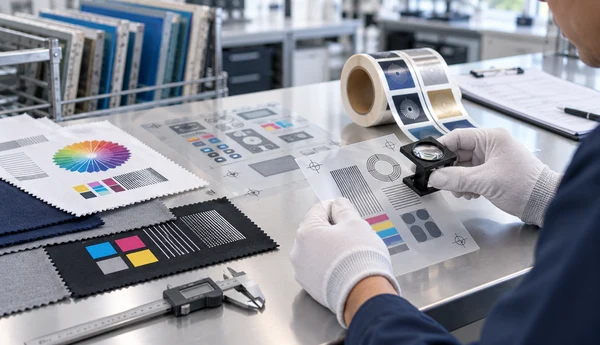
Agree a sample-test plan using representative production material, artwork and consumables. Define registration, adhesion, curing, appearance and accepted-output checks, along with the record to be supplied. Confirm sample quantities, test charges, shipping responsibilities and acceptance criteria with each supplier before sending material.
To discuss a configuration, request a quotation with the material, print area and output details above. For a label or film line, start with the mesin sablon roll-to-roll kami category.
Pertanyaan yang Sering Diajukan
Questions to resolve when comparing manufacturers.
1. Who is the largest screen printing machine manufacturer in the world?
This guide does not establish a largest manufacturer by revenue, shipments or installed machines. Those measures require current, comparable evidence. Compare manufacturers by the machine format, application fit and documented support offered for your project.
2. Which country makes the best screen printing machines?
Country alone does not establish machine quality or suitability. Compare the exact model, supplied configuration, material tests, applicable documentation and destination support. The entries above cover textile, roll-to-roll, flatbed and cylinder systems with different purposes.
3. How much does an industrial screen printing machine cost?
Request a current quotation for the exact configuration. Compare print stations, registration, curing, finishing, feeding and inspection modules, as well as packing, transport, installation, training and taxes. This guide does not publish a verified cross-manufacturer price range.
4. What is the difference between textile and industrial screen printing machines?
Textile screen-printing presses commonly use pallet, carousel or oval layouts for garments. Industrial systems can use flatbed, cylinder or roll-to-roll formats for substrates such as film, glass and circuit materials. Select the feed method, ink process and handling requirements for the actual job.
5. Are Chinese screen printing machine manufacturers reliable?
Evaluate each supplier using company and factory information, current documentation, a configuration-specific quotation and representative material tests. Check the certificate holder and scope, the applicable product-compliance documents, named components and written support terms. Apply the same checks regardless of the supplier’s country.
6. What is a roll-to-roll screen printing machine?
A roll-to-roll screen printing machine processes a continuous web through printing and the specified drying or curing stages, with downstream winding or other handling defined by the line. Registration, cold foil and other finishing modules depend on the configuration. See the mesin sablon roll-to-roll kami category for current Winshol configurations.
7. How do I verify a screen printing machine manufacturer before buying?
Verify the supplier and proposed machine through these checks:
- Confirm company, factory and contracting-entity information.
- Check current quality-system scope and applicable documentation for the model and destination.
- Review the actual configuration through a factory visit or recorded walkthrough.
- Agree representative sample tests and measurable acceptance criteria.
- Get supplied scope, installation, training, spare-parts and warranty terms in writing.
These checks reduce uncertainty but do not guarantee performance or commercial outcomes. Record unresolved questions in the quotation and acceptance plan.
8. Which Winshol page should I open first for a label or film line?
Start with the roll-to-roll screen printing machine category. Then review the mesin sablon UV WL-350D if the job needs one screen color and a compatible UV-curable ink. Confirm web width, print area and curing against the production material before treating either page as a final specification.
9. What catalogue limits does the WL-350D UV list?
Adapun mesin sablon UV WL-350D is listed as a single-color roll-to-roll configuration with a two-lamp UV dryer, a 350 mm maximum web width, a 330 × 450 mm maximum print area and a 450 mm maximum feed length. These are catalogue limits for that configuration, not a guaranteed output, speed or registration tolerance. A 450 mm feed length is the listed maximum feed, not a production speed.
10. What should I send to request a quotation after using this shortlist?
Share the application, substrate and thickness, roll or sheet dimensions, required print area, number of colors, ink type and drying route, registration requirements, target output and destination country. Artwork or samples help the engineering review. Send the brief through the contact page. Dalam Daftar periksa RFQ mesin lists the same items in more detail.
Send the same brief through the contact page. For label or film lines, start with the mesin sablon roll-to-roll kami category.
For more questions on inks, web widths, and curing, a dedicated screen printing machine FAQ is worth a look.