






Left-Feed vs Right-Feed Screen Printing Machines: 3 Layout Checks Before You Order
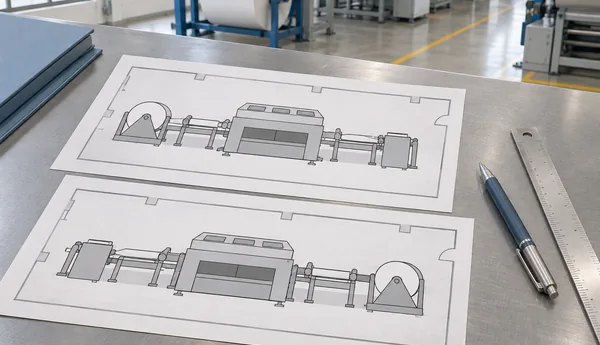
Compare left-feed and right-feed screen printing machines on two drawings based on the same factory floor plan. Have the supplier mark where the web enters, where finished rolls leave and which side the operator works from. Then check whether people can change rolls and service the machine without blocking the aisle. The version you order should be named on both the approved drawing and the quotation.
This check is about the line as it will be used, not how it gets through the factory door. A printer can fit on the floor and still face the wrong way for your roll staging or put an oven panel against a wall.
1. Put both feed directions on the same floor plan
Start with a measured drawing of your bay. Pick a fixed corner or column intersection as the reference point, and use the same reference, scale and viewing direction on both versions. Ask the supplier to add an operator-side arrow, show the web travel from the incoming roll to the outfeed, and label each module. A photo alone cannot tell you which end is left from your position in the factory.
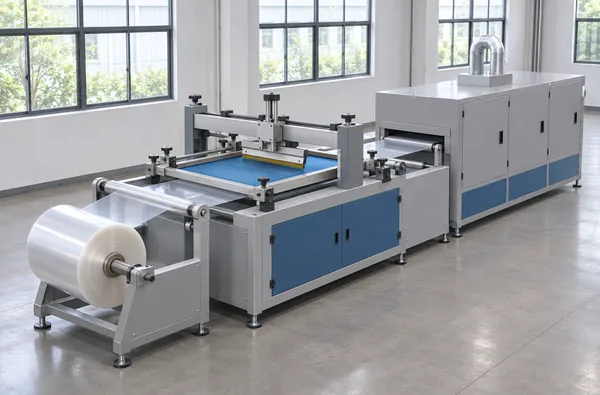
For a concrete comparison, pages 16 và 17 of the Winshol catalogue show two single-color configurations with drying ovens: the WL-350D left-feed oven model và WL-350D-Y right-feed oven model. Both catalogue entries list an unwinder, a printing machine, two web transfer boxes and a drying oven. Oven take-up web guiding is identified as optional. Confirm what the quote includes at the outlet, especially if you expect a take-up or rewinder. Do not assume a full mirror image or infer an installed footprint from the main-machine dimensions.
2. Trace the two roll routes and the places people need to reach
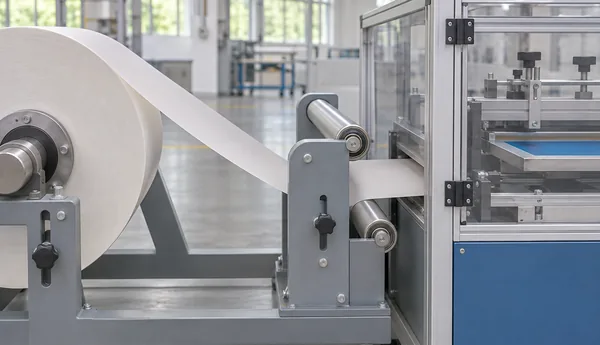
Draw the raw-roll route from staging to the unwind station and the finished-roll route from the take-up point to the next process. Use the handling method your site actually uses. On each drawing, show where a roll waits, where it turns and where it is set down. Then mark the standing and working space for threading, screen changes, routine cleaning, and opening oven doors or cabinet panels.
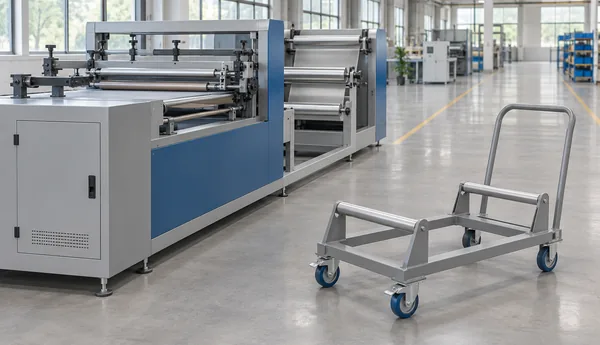
Look at the busiest moment, not just the running position. For example, if a roll cart must cross the operator aisle to reach a right-feed inlet, trace the same move on the left-feed layout. The better side is the one that clears the real route and access needs. Ask the supplier to state the job-specific clearances, rather than carrying over a distance from the other layout.
| Comparison field | Record for each option | Who confirms it |
|---|---|---|
| Hướng cuộn | Fixed floor reference, operator view, incoming roll, web travel and finished-roll exit | Machine supplier and site lead |
| Rolls and access | Staging points, handling routes, work space and door or panel openings | Production, maintenance and machine supplier |
| Quoted line and interfaces | Included and optional modules, utility positions, open items and drawing revision | Purchasing, site engineering and machine supplier |
3. Put the approved drawing revision on the quotation
Before signing, match the quotation to the drawing by model, feed direction and revision. Check that the line outline shows every quoted module. Label the take-up, cabinets and other interfaces, and distinguish what the supplier provides from what your site or another vendor provides. Ask the supplier for the electrical schedule, exhaust requirements where applicable, and the actual connection points. Do not build a site-services plan from a catalogue voltage entry.
Leave any unanswered item visible on the drawing or in the quotation, with a named person responsible for closing it. If a cabinet moves, an optional guide is added or the line changes orientation, mark the revision and send it back for approval. The useful handover is one agreed drawing that purchasing, production and the supplier can all identify.
For a Winshol quotation, send your measured bay plan, preferred operator side, roll staging points and the equipment already fixed in place. Ask for both feed options against that same plan if the choice is still open. Use the separate delivery checklist when you need to plan crates, unloading and the installation handover.
Câu hỏi thường gặp
1. What does left-feed mean on a screen printing machine?
It means the material enters from the left in the supplier’s stated view. Ask the supplier to mark that viewpoint, the input roll and the direction of web travel on the drawing. Left and right reverse when you view the machine from the other side.
2. Is a right-feed machine a mirror image of a left-feed machine?
Do not assume so. Ask for separate drawings. The web path can change without the cabinet, oven doors, controls or service panels moving to the opposite side.
3. Which Winshol drying-oven models are listed as left-feed and right-feed?
The Winshol catalogue identifies the single-color WL-350D on page 16 as left-feed and the single-color WL-350D-Y on page 17 as right-feed. Those are catalogue descriptions, not approved site layouts.
4. Do the catalogue machine dimensions show the full installed footprint?
No. Use the supplier’s installed drawing for the full quoted line. It should show each included module and the clearances needed for operation, roll changes and service.
5. Should I include upstream and downstream equipment on both drawings?
Yes, where it affects web handoff, material movement or access. Show the actual fixed positions, the inlet and outlet of the quoted line, and which party supplies each connecting module.
6. What should I check around the roll-handling stations?
Trace how an incoming roll reaches the unwinder and how a finished roll leaves the line. Use your actual handling method, and check for conflicts with the operator aisle and access to the oven and cabinets.
7. Can we reuse the utility drawing from the other feed direction?
Only if the supplier confirms it for the selected configuration. Ask for the current electrical, exhaust and other applicable connections with their positions and requirements; a shared main-machine specification does not establish the requirements for the entire line.
8. Which documents should match before I place the order?
The quotation and approved layout should agree on the model, feed direction, module list and drawing revision. Keep unresolved interfaces in writing and identify who will confirm them before release.