






Found a Screen Printing Machine for Sale? 5 Questions to Ask the Factory
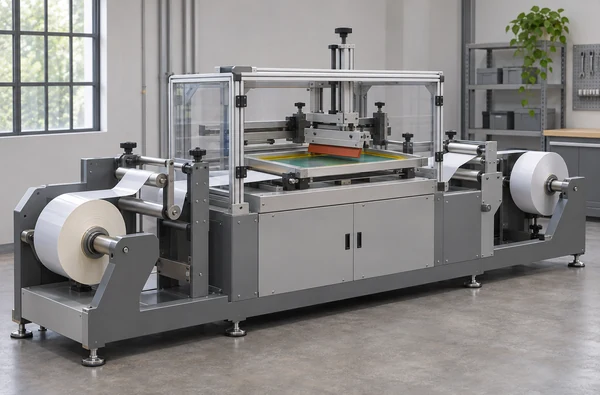
Found a screen printing machine for sale? First find out whether the listing describes a specific unit or a configuration the factory will build for you. Before approving the purchase, ask the factory to connect that listing to an identified machine or build specification, a defined supply scope and a trial relevant to your job. A familiar model number and a clean demonstration video leave several purchasing decisions unanswered.
The five questions below concern the offer already in front of you. They are not a replacement for preparing a production brief. If you still need to describe the job, use the daftar periksa RFQ mesin sablon first.
1. Is this machine in stock or made to order?
Ask what “available” means in this quotation. It could describe a completed unit offered for delivery, a demonstration machine or a configuration that the factory will build after agreement. Get the status in writing, with the date of confirmation. A catalogue page is not a stock record.
For an existing machine, request current photographs and its identifying details. Establish whether it is new, has been used for demonstrations or has another history that affects the sale. Ask what work remains before dispatch, including any agreed changes and acceptance trial. Being assembled does not necessarily mean being ready for your job.
For a made-to-order machine, start with the approved configuration and drawing revision. Link the order to the final serial number once it has been assigned; do not request a nonexistent nameplate as proof that a future build is ready. Have the factory distinguish build time from the time needed for your approvals, material trial and dispatch preparation.
The useful answer is a dated status tied to this offer. Keep an unconfirmed delivery date open rather than building a production launch around it. None of the catalogue examples below establishes current stock or a delivery commitment.
2. Do the photograph, nameplate and drawing identify the same configuration?
A model family can contain more than one machine arrangement. Ask the factory to mark which photographs show the actual offered unit and which are reference images. Compare the proposed equipment with a labelled layout, the full configuration description and, for an existing machine, its identification plate. If they differ, obtain a corrected document or a written explanation before approval.
Winshol’s WL-350D pages illustrate why the short model name is not enough. The three configurations below share listed width and print-area limits, but their drying arrangements differ.
| Official product page | Listed arrangement | Shared catalogue limits | Clarification to retain |
|---|---|---|---|
| WL-350D UV | Single-color roll-to-roll printing with a two-lamp UV dryer | 350 mm maximum web width; 330 × 450 mm maximum print area | The UV configuration and supplied line modules |
| WL-350D left-feed oven version | Left-feed, single-color printing with a drying oven | 350 mm maximum web width; 330 × 450 mm maximum print area | The feed arrangement and agreed oven specification |
| WL-350D steel-plate catalogue version | A separately listed configuration with a spring-type material-conveying oven | 350 mm maximum web width; 330 × 450 mm maximum print area | The exact catalogue designation, tooling and material-handling arrangement |
These are published limits, not proof that a particular substrate or artwork has passed a trial. The steel-plate page also asks buyers to clarify that designation with engineering; it should not be read as confirmation that the production substrate is steel.
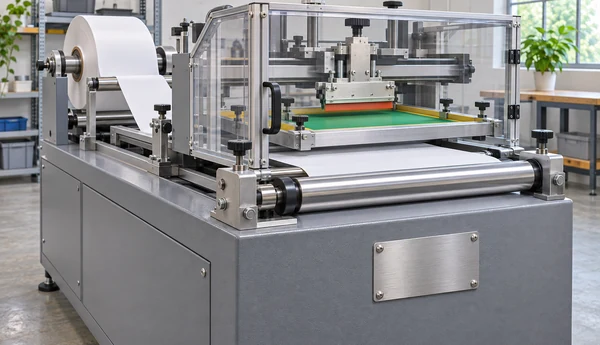
For a custom build, photographs may show a comparable earlier machine. That is useful context if clearly labelled. The purchase approval should identify the new build’s agreed layout and scope, with the final machine identity added later. Do not let a reference image silently become the acceptance specification.
3. Which modules are included in the price, and which are excluded?
Work through the quotation against the line drawing, starting at material entry and ending where the finished work leaves the supplied equipment. Give every module a status: included, optional, buyer-supplied or unresolved. A blank line is not an agreed exclusion.
The WL-350D UV page, for example, lists unwinding, printing, feeding, UV drying and rewinding equipment. It also warns against assuming that additional processes or registration equipment belong to the quoted machine. Use the product page to ask a precise question; the final quotation must identify what is actually being sold.
Ask the factory to point out anything visible in the sales photographs that is not included. Check controls and interconnections between quoted modules as well as the modules themselves. If another supplier provides the dryer or downstream equipment, establish who checks the interface and who addresses a problem at that handover.
| Keputusan | Evidence to attach | Leave pending when |
|---|---|---|
| Availability | Dated unit status or agreed build schedule | “In stock” refers only to a model family |
| Konfigurasi | Matching description, drawing revision and relevant photographs | The dryer, feed arrangement or equipment shown differs |
| Cakupan pasokan | Itemized modules, options and exclusions | A required operation has no identified supplier |
| Job suitability | Identified material trial and agreed inspection results | The sample uses different stock or an unexplained setup |
| Installation and support | Written responsibilities, costs and warranty terms | A service is promised without an owner or scope |
Compare totals only after the offers describe the same required work. A lower price may be reasonable, but you need to know which tasks or equipment remain for you to purchase.
4. Can the factory run a relevant sample on your production stock?
A demonstration on easy stock can show that a machine operates. For your buying decision, ask what it shows about the material and artwork you intend to run. Provide identified production stock and agree the trial purpose before sending it. If the factory substitutes another material, record the substitution and the questions it leaves unanswered.
Keep the material reference, artwork revision, ink or other consumable identity and tested machine configuration with the samples. Agree what will be inspected, who will inspect it and how the results will be recorded. Registration, drying and the condition of the material after handling may matter to the job, but each needs its own agreed criterion rather than a general “sample approved” message.
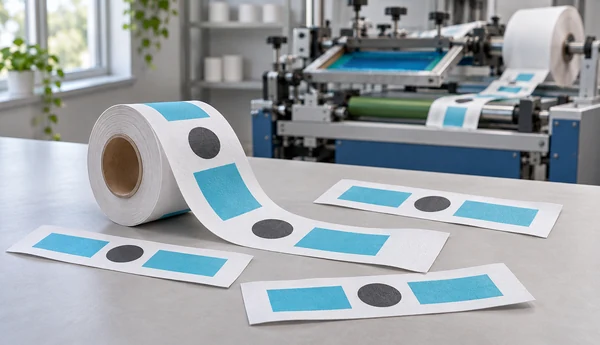
Ask for the sequence behind the attractive finished sample. Was it produced on the quoted configuration? Did the trial include the specified drying stage? Were any adjustments or separate finishing operations needed? Retain representative output and the trial record together. If output is part of the acceptance requirement, define the observation period and what counts as accepted production before comparing a quoted speed with a result.
A successful trial on another machine may support the process discussion. It does not by itself confirm that the offered unit is in the same condition or has the same equipment. Identify what still needs checking on that unit, or on the completed build, before the agreed release milestone.
5. Who is responsible for installation, commissioning and warranty work?
Put names and scope beside the service promises. Identify the company accepting the order, the party delivering the machine and the team responsible for commissioning. If a local installer or another equipment supplier is involved, define the handover between them. “Factory support” is too broad to settle who attends the site or pays for a return visit.
Request a written installation plan for the quoted configuration. It should allocate delivery access, unloading, positioning, utilities and the checks required before startup to the responsible parties. Qualified personnel should plan and perform the work under the machine documentation and applicable site requirements. A sales demonstration is not an installation safety procedure.
Separate commissioning from operator training and from warranty service. Ask what each includes, how completion will be recorded and which expenses are outside the price. For warranty terms, resolve the start date, covered items, exclusions, reporting route and responsibility for parts, labor and travel. Obtain the actual agreement rather than copying a duration from another listing.
Before approving the purchase, collect the dated availability statement, matched configuration documents, supply scope, trial record and service responsibilities in one order file. Any unresolved item should have an owner and a decision point. That gives the factory a clear basis to build or prepare the machine, and gives you a specific basis for accepting it.
Pertanyaan yang sering diajukan
1. Does a screen printing machine for sale mean it is in stock?
No. Ask whether the offer concerns a completed unit, a demonstration machine or a made-to-order configuration. Obtain a dated status and clarify the work and approvals still required before dispatch.
2. What identification should I request for a made-to-order machine?
Start with the full configuration, approved layout and drawing revision linked to your order. Add the final machine serial number once it is assigned. Reference photographs should be identified as examples, not presented as the completed machine.
3. Is the model number enough to compare two machines?
Not always. A model family can include different drying or material-handling arrangements. Compare the complete configuration description, drawings and supplied modules. Resolve any mismatch between the listing, quotation and photographs before approval.
4. Do matching web width and print area mean the machines do the same job?
No. Those limits describe only part of the configuration. The three WL-350D examples in this guide share listed width and print-area limits but use different drying arrangements. Check the selected ink, stock and complete process on the proposed configuration.
5. How should I handle equipment shown in a photo but missing from the quote?
Ask the supplier to mark it as included, optional, buyer-supplied or excluded, with any interface responsibility explained. Do not treat a photograph as a packing list. Keep the clarified scope with the approved quotation.
6. Can a factory sample on different material approve my job?
It may help assess a process, but the material difference limits what it proves. Record the substitute stock and tested setup, then agree which checks must still be completed using your production material before job approval.
7. What if the sample was produced on a different machine?
Identify that machine and compare its configuration with the offered unit or planned build. Retain the process result, but specify the remaining checks on the machine being supplied. Do not assume equivalent equipment or condition from a shared model name.
8. What should installation and warranty terms say before purchase?
They should identify responsible parties, installation prerequisites, commissioning and training scope, warranty start date, covered items and exclusions. Resolve who pays for parts, labor, travel and work by local contractors, and record how issues will be reported and handled.