







Screen Printing Operator Training: Practical Tasks and Handover Records
An operator who has watched a successful demonstration may still need practice preparing a job, checking the first print and responding to routine production problems. Define training around those tasks for the purchased line and the people who will run it. The agreement should identify practice jobs, documents and a way to review readiness, rather than merely state “training included.”
This guide is for procurement and production teams buying a first roll-fed line, adding a different configuration or preparing another shift. It focuses on knowledge transfer. Machine performance acceptance, site access and the spare-parts package need their own agreements.
Define the outcome before comparing training offers
Watching a trainer produce an acceptable print is useful. Your operator still needs to prepare an approved job, recognize problems and know when to call for help.
Ask each supplier to separate three activities:
- Have the trainer demonstrate the agreed operation and explain its limits.
- Give named employees time to repeat their assigned tasks under supervision.
- Record the tasks completed successfully, the practice still needed and who will arrange it.
Keep this review separate from machine performance acceptance. Neither a signed attendance sheet nor a successful sample run establishes that every shift is ready for independent production. The buyer still needs to authorize people for their work under its own procedures and applicable requirements.
Match the curriculum to the purchased line and actual jobs
The training schedule should identify the equipment and modules actually supplied. A roll-fed screen printing line may involve a printing unit, registration controls, drying or curing and web-handling equipment. Training on one part does not automatically cover the rest.
Gallus Print Academy offers modular training, including screen printing, and describes on-machine instruction using customers’ current jobs and substrates. Ask your shortlisted manufacturer whether its proposed sessions use an equally relevant practice job.
Give shortlisted suppliers one representative approved job and one realistic job-change scenario. Ask what materials, screens, inks, artwork and trained personnel must be available for practice. Check arrival dates: a practice job cannot run if its consumables arrive after the trainer leaves.
For the Winshol roll-to-roll machine range, confirm the training scope against the proposed configuration rather than assuming every optional module is included.
Clarify where machine instruction ends
Screen preparation, ink selection, artwork preparation and downstream finishing may be separate responsibilities. SPS TechnoScreen distinguishes machine operator training from pre-press and post-press instruction offered on demand. Ask the same scope question of any supplier: which process skills are prerequisites, and which will the trainer teach?
This is particularly relevant when the team is moving from another printing process. An experienced machine operator may still need screen-printing process instruction. Conversely, an experienced screen printer may need substantial practice on unfamiliar controls and web handling.
Use a role-and-task matrix instead of one attendance list
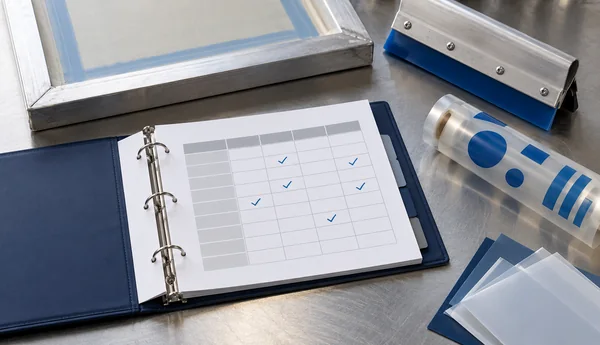
Adapt this planning template with the supplier and the people responsible for your site’s safety and production procedures. The curriculum will depend on the delivered line and each person’s duties.
| Role | Scope to agree with the manufacturer | Evidence to request |
|---|---|---|
| Production operator | Normal job preparation, approved operation, routine checks and shutdown for the supplied configuration | Supervised task review linked to the correct operating instructions |
| Shift or quality lead | Job approval points, agreed print checks, defect reporting and escalation | Completed example job record and an explanation of when to stop and seek help |
| Authorized maintenance personnel | Only the maintenance tasks assigned to their role, with required prerequisites and limits | Relevant documents and a record of covered tasks and unresolved training needs |
| Process or setup lead | Approved job settings, changeover responsibilities and controlled updates | A usable setup record for the agreed practice job |
Name the people and shifts to be covered. If only one employee attends, decide who will train the remaining team and what support that person needs. Do not assume attendance makes someone qualified to train colleagues or repair the equipment.
The UK’s HSE guidance on training and competence links adequate training to the work, equipment and existing competence, and includes demonstration and assessment among possible methods. It is UK guidance, not a statement of the rules in every destination market. Agree the local requirements with appropriately qualified people.
Choose the training location for the task
Factory, on-site and remote sessions can serve different purposes. Compare what the buyer can actually practise in each format rather than treating the number of training days as the main measure of value.
| Dạng vật liệu | Useful questions for the proposal | Important limitation |
|---|---|---|
| Manufacturer’s facility | Will the purchased configuration and agreed materials be available? Who will attend and bring the learning back? | Conditions may differ from the buyer’s installed workflow and shift team. |
| Buyer’s site | Which utilities, materials, staff and installation prerequisites must be ready before training starts? | Delays can consume the visit unless responsibilities and rescheduling terms are agreed. |
| Remote session | Is the session for documentation, controls familiarization, follow-up or another defined task? | It does not automatically replace supervised hands-on practice or site-specific instruction. |
Separate training time from installation work. If the same engineer performs both, ask how much of the visit is reserved for staff practice after the equipment is ready. Also clarify whether additional process coaching, another shift or a return visit changes the scope or price.
Agree how practical learning will be reviewed

Ask for a task-based review using the supplied instructions and agreed job. For example, can the designated operator locate the correct setup record, explain the routine checks, recognize a condition requiring escalation and complete an approved task under supervision?
The assessment should stay within that person’s authorized duties. Do not create artificial faults, defeat guards or ask unqualified employees to perform maintenance for the sake of a demonstration. The manufacturer and the buyer’s competent personnel should define safe practice activities.
Record the task, participant, equipment configuration, document revision, review date and outcome. Where a task needs more practice, name the follow-up owner and the conditions for reassessment. Avoid inventing a universal pass mark or a fixed number of hours that supposedly suits every machine and team.
Keep unresolved equipment issues separate from training gaps. An operator should not be marked unready because a required module was unavailable; equally, a machine acceptance signature should not close an unfinished training item.
Specify the documents the next shift will actually use

Request a document list before the visit. Confirm language, format, revision and which items are included in the agreed package. Useful items to discuss include:
- The operating manual for the delivered configuration, including relevant module instructions.
- An approved practice-job setup record and the limits on changing it.
- Routine check and reporting forms suited to the assigned roles.
- A troubleshooting and escalation guide stating when the operator should stop and contact authorized support.
- Attendance and task-review records, including open items and follow-up responsibilities.
Ask who will update documents when the configuration or approved procedure changes. If translated material or an interpreter is needed, settle that before training. Confirm permission and availability before assuming that sessions can be recorded or that recordings will be supplied.
Engineered Printing Solutions’ training page includes daily operation, maintenance, changeover, troubleshooting and quick-reference documentation. Although its equipment context differs, these are useful document categories to discuss with a roll-fed screen printing supplier.
Put the training scope in the proposal
Send the supplier a short attachment with the line configuration, staff roles and shifts, representative job, prerequisite skills, preferred language and proposed training format. Ask for a written response covering included tasks, supervised practice, document deliverables, review method, responsibilities and any exclusions.
Also confirm who pays for travel, accommodation, consumables, interpretation, additional visits and remote follow-up. Do not assume these items are included or chargeable without reading the actual proposal.
Máy của Winshol OEM/ODM information discusses localized manuals, training materials and project-specific service arrangements. Ask Winshol to confirm what applies to your proposed machine, including the division of responsibilities between Winshol, your staff and any local distributor. Confirm duration and fees in the proposal; do not assume an on-site visit or a competency certificate is included.
Sử dụng danh sách kiểm tra khi yêu cầu báo giá máy for the broader equipment specification. Keep this training attachment focused on what your team needs to learn and the evidence you expect at handover. To discuss a project, liên hệ Winshol with those details and request the training scope alongside the machine proposal.
Câu hỏi thường gặp
1. What should “operator training included” mean in a machine quotation?
It should be expanded into named tasks, participants, location, prerequisites, supervised practice, documents and a review method. Confirm exclusions and follow-up responsibilities in writing; the phrase alone does not establish a complete training package.
2. Is a machine demonstration enough to train operators?
A demonstration shows how the trainer performs the work. Operators also need appropriate practice and review for their assigned tasks. A successful machine trial does not by itself establish that the buyer’s staff can operate independently.
3. How many days of training should buyers request?
There is no suitable fixed duration for every purchase. Ask the supplier to estimate time from the supplied configuration, staff experience, tasks, number of participants and practice jobs, then state what happens if agreed training remains incomplete.
4. Should operator and maintenance training be combined?
Some introductory information may overlap, but task permissions and prerequisites differ. Separate the role-specific curriculum so operators are not treated as authorized maintenance personnel merely because they attended the same session.
5. Can remote training replace an on-site session?
Remote sessions can support defined activities such as document review or follow-up. Whether they are sufficient depends on the task and the team’s competence. They should not automatically replace supervised hands-on practice or site-specific instruction.
6. Which materials should be ready for practical training?
Agree the representative job and its required substrates, inks, screens, artwork and other consumables with the supplier. Confirm quantities and availability before the session rather than assuming demonstration materials will match the buyer’s production needs.
7. What evidence should a buyer retain after training?
Retain the covered task list, participant and role records, relevant document revisions, practical-review outcomes and open follow-up items. Keep training records distinct from machine performance acceptance and the employer’s authorization to perform particular work.
8. What should buyers ask Winshol to confirm before ordering?
Ask Winshol to confirm the training tasks, participants, language, format, prerequisites, documents, practical review and service responsibilities for the proposed configuration. Request the included costs, exclusions and follow-up arrangements in the written proposal.