

Top 10 Screen Printing Machine Manufacturers (2026 Global Guide)
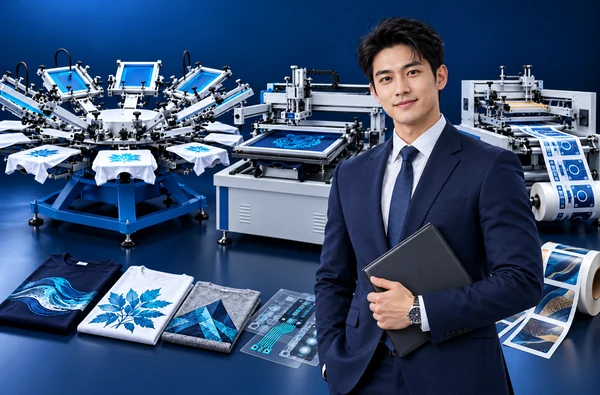
The top 10 screen printing machine manufacturers in 2026 are Winshol (China), ATMA Champ (Taiwan), M&R Printing Equipment (United States), MHM (Austria), ROQ (Portugal), Anatol Equipment Manufacturing (United States), Sakurai Graphic Systems (Japan), SPS Technoscreen (Germany), THIEME (Germany), and Systematic Automation (United States).
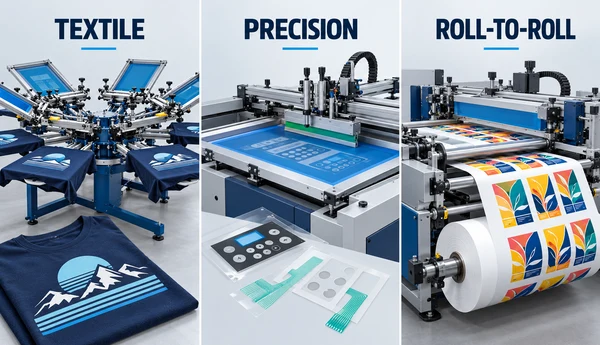
Rather than a simple ranking, this guide groups them by what they actually build: two roll-to-roll and label printing specialists, four global leaders in textile screen printing, and four precision and industrial printing specialists. One disclosure before you read on: Winshol, the company behind this guide, appears first in the roll-to-roll group. This is an editorial order, not an independent ranking or a ranking by size or revenue. Each company here focuses on one thing and does it well.
Quick Comparison of the Top 10 Screen Printing Machine Manufacturers
If you have two minutes, this table is your shortlist.
| Manufacturer | Country | Specialty | Best For |
|---|---|---|---|
| Winshol | China | Roll-to-roll with CCD registration | Labels, packaging, thin films |
| ATMA Champ | Taiwan | Roll-to-roll and flatbed precision | PCB, optoelectronics, solar |
| M&R Printing Equipment | United States | Automatic textile presses | High-volume garment plants |
| MHM | Austria | High-end textile automatics | Premium textile producers |
| ROQ | Portugal | Screen + digital hybrid lines | Mixed screen/digital production |
| Anatol Equipment Manufacturing | United States | All-electric automatics | Mid-size shops, lower running costs |
| Sakurai Graphic Systems | Japan | Cylinder and precision flatbed | Electronics, packaging |
| SPS Technoscreen | Germany | STOP cylinder presses | Security, industrial transfers |
| THIEME | Germany | Precision flatbed systems | Glass, automotive, membrane switches |
| Systematic Automation | United States | Semi/auto flatbed presses | Custom commercial and industrial jobs |
Industry estimates put the global screen printing machine market at roughly USD 1.5–2.5 billion in 2025, growing at a compound annual growth rate (CAGR) of around 5–7% per year through the end of the decade. Figures vary between reports from HTF Market Intelligence, ReportPrime, and pmarketresearch. Much of that growth comes from Asia-Pacific, where label, packaging, and electronics production keeps expanding. Not sure what type of press fits your product? Our sheet-fed vs roll-to-roll comparison explains the difference.
How We Selected These 10 Manufacturers
We shortlisted the ten companies above using five filters:
- Presence in independent industry reports and trade media — as recognized vendors, not paid placements.
- Product line breadth — from semi-automatic machines to fully automatic production lines.
- Certifications and quality systems — verifiable ISO 9001 and CE documentation, plus named components.
- Global service and spare-parts reach — whether a printer can get parts and support in its destination market.
- Segment specialization — a proven track record in one application family: textile, precision industrial, or roll-to-roll.
The manufacturers are grouped by specialty, with Winshol presented first as the publisher of this guide. Numbering shows editorial order rather than a comparative score. The groups simply serve different buyers.
Roll-to-Roll & Label Screen Printing Specialists
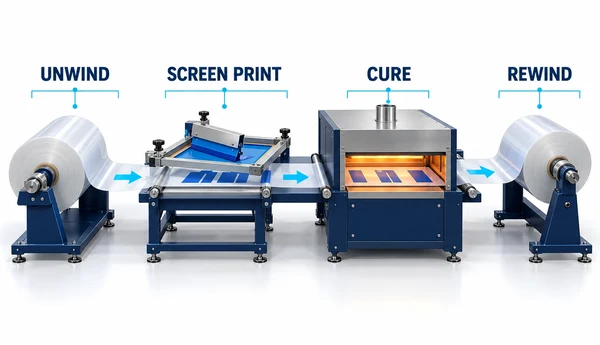
This group prints on flexible material fed from a roll (labels, packaging films, membrane films, and foils), then rewinds it for die-cutting or laminating. If you run a label or flexible packaging plant, roll-to-roll screen printing machines are what you are shopping for, and the two companies below are specialist roll-to-roll screen printing machine manufacturers worth shortlisting.
1. Winshol (China)
Best for: international label, packaging, and film printers seeking complete roll-to-roll lines, including buyers in Europe, North America, the Middle East, South America, and Asia.
Winshol (Guangzhou Winshol Tech Co., Ltd., China) designs and builds screen printing equipment from its Guangzhou office and its Dongguan Wangle precision factory. Its core product is the integrated roll-to-roll line: screen printing, UV curing, hot-air drying, cold foil, and web handling engineered to work as one system. CCD vision registration and Fuji servo motors keep every color in position on thin films. The current range includes the WL-350-3C three-color UV roll-to-roll press (330 × 450 mm print area, 450 mm web width), the WL-350-LTJ cold foil machine (350 mm web width, 0–15 m/min), and the WL-5070PZ flatbed press (500 × 700 mm). Winshol operates under ISO 9001:2015, offers CE-certified models, and provides free sample testing on customer material. The range focuses on narrow and mid web widths (up to 450 mm), so plants running wider webs should also compare larger-format specialists. You can find full specifications for its CCD registration screen printing machines on the company website.
2. ATMA Champ (Taiwan)
Best for: PCB, optoelectronics, and solar applications that need precision roll-to-roll or flatbed printing.
ATMA Champ (Taiwan) builds roll-to-roll and flatbed precision screen printing machines for printed circuit boards, optoelectronics, and solar cell production, and exports to more than 70 countries. Its market position comes from combining Taiwanese manufacturing quality with pricing well below European and Japanese precision builders, a mix that explains its footprint across Asia’s electronics industry. On thin, delicate substrates, yield depends on web tension control and registration accuracy, and that is where ATMA’s roll-to-roll systems focus. The practical checks: local service coverage, English documentation, and spare-parts lead time. ATMA is a sensible first quote whenever a European precision press strains the budget but the application still demands real accuracy.
Global Leaders in Textile Screen Printing
Textile screen printing is the biggest and most familiar part of the industry: most printed garments pass through a press built by one of these four companies.
3. M&R Printing Equipment (United States)
Best for: high-volume garment plants that need maximum press uptime and fast spare-parts supply.
M&R Printing Equipment, headquartered in Roselle, Illinois, is widely described in industry reports as the largest screen printing machine manufacturer in the world. Its flagship automatic presses, the Gauntlet, Cobra, and Alpha series, are common sights in garment plants across North America, Europe, and Asia. Buyers choose M&R for two reasons: a deep automatic press range that scales from growing shops to 24-hour production, and a global distributor network that keeps spare parts close to most major printing hubs. The trade-off is price: an M&R automatic suits printers with the volume to justify it. Buyers in India and Southeast Asia should confirm the local distributor’s service depth before signing.
4. MHM (Austria)
Best for: premium textile producers who want European engineering and tight registration on fine detail work.
MHM (Austria) builds high-end automatic textile screen printing presses and, together with M&R and ROQ, forms the trio of names that dominate serious garment production in Europe. Its flagship platforms include the X-Type Plus carousel, the Synchroprint 5000, and the iQ Oval. These are machines for fashion labels and high-detail multicolor work. MHM’s reputation rests on build quality and registration stability over long runs, which reduces misprints on fine halftones and small text. Support runs through a dealer network across Europe and beyond, so buyers in Asia should confirm in writing exactly who installs, trains, and services the machine in their market. For plants moving from manual to automatic production, MHM is the premium European benchmark.
5. ROQ (Portugal)
Best for: printers who want screen printing and digital printing working together on one line.
ROQ (Portugal) has built its name on textile screen printing automation and on hybrid machines that pair screen stations with digital print heads. Its flagship products include the Oval Evolution automatic press, the YOU platform, and its Hybrid line. The hybrid systems matter. They let a shop print a soft-feel water-based base with screen stations, then add photographic color with digital heads, all in one pass. That is exactly what fashion and sportswear producers need when bulk consistency and short-run variety must coexist. ROQ exports globally through regional dealers. If your order book points toward shorter runs and more design changes, put ROQ at the top of this group.
6. Anatol Equipment Manufacturing (United States)
Best for: mid-size shops that want automatic-press productivity without the cost of running air compressors.
Anatol Equipment Manufacturing (United States) is best known for its VOLT series of all-electric automatic screen printing presses. Conventional automatics use a shop air compressor to drive the print heads and indexing; VOLT presses run on electric motion instead, which removes the compressor, the air lines, and part of the energy bill. That makes Anatol a natural step for printers moving from manual to automatic production, or for shops where power costs make compressed air expensive. Anatol positions itself at mid-range prices with a strong United States-based support and parts operation. Its presses suit shops that have outgrown entry-level equipment but are not ready for top-tier European pricing. Outside North America, verify local service coverage first. Anatol’s network is strongest at home.
Precision & Industrial Screen Printing Specialists
The next four companies rarely print a t-shirt. Their presses put conductive inks on circuit boards, legends on membrane switches, and decorative layers on glass and car parts. For buyers comparing industrial screen printing machine manufacturers, this is the shortlist, and precision matters more than speed.
7. Sakurai Graphic Systems (Japan)
Best for: electronics, membrane switch, and packaging work where micron-level registration decides yield.
Sakurai Graphic Systems (Japan) makes cylinder and flatbed precision screen printing presses, and it is widely treated as a benchmark for high-precision printing in electronics and packaging. In a cylinder press, the squeegee and screen roll over the substrate on a precision cylinder. That design is where the tight registration and thin ink-film control come from. It is the tolerance that printed electronics, ceramic substrates, and premium packaging demand. Japanese builders like Sakurai also carry a reputation for long service life. Expect a higher entry price than Taiwanese or Chinese equivalents. If your application tolerates loose registration, cheaper machines will do; when tolerances tighten, Sakurai stays on the shortlist.
8. SPS Technoscreen (Germany)
Best for: security printing, precision packaging, and industrial transfer applications.
SPS Technoscreen (Germany) manufactures the STOP cylinder platform press line, a machine family that screen printers in security and industrial applications have run for decades. The presses are known for high-precision printing on security documents, packaging, and industrial transfer products, where a registration slip or an uneven ink film can scrap an entire batch. SPS presses are sheet-fed platform machines, so they suit cut sheets, transfers, and specialty substrates rather than roll goods. Agree on price, spare-parts lead times, and local support with your dealer before the machine ships. If your work involves security features or strict certification requirements, SPS Technoscreen is one of the first names experienced printers mention.
9. THIEME (Germany)
Best for: membrane switches, glass, and automotive printing that must stay consistent for decades.
THIEME, founded in 1960 and based in Teningen, Germany, is one of Europe’s longest-established precision screen printing machine manufacturers. The company has delivered more than 9,000 presses over its history, employs around 350 people, and in March 2024 launched the THIEME 3000 Vision AL, a fully automatic model, proof that the company is still investing in new automation. THIEME presses serve glass printing, automotive, membrane switch, and film insert molding (FIM) applications. Membrane switch production rewards exactly these strengths: repeatable multicolor registration on thin, flexible panels. If you are evaluating screen printing machines for membrane switches, compare registration tolerance, substrate handling, and ink-line integration rather than headline speed. Expect premium European pricing and an experienced service organization.
10. Systematic Automation (United States)
Best for: custom commercial and industrial flatbed jobs that catalog machines cannot handle.
Systematic Automation (United States) is a long-established manufacturer of semi-automatic and fully automatic flatbed screen printing presses for commercial and industrial work. Where the European and Japanese precision builders target defined industries, Systematic Automation’s strength is customization. Its presses are adapted for everything from glass and ceramics to promotional products and specialty industrial parts. That flexibility has two sides: a custom flatbed can solve problems no catalog machine addresses, but every customization needs a clear specification and sample testing. The company serves small shops and industrial plants alike, a common pick when an application falls between categories. Buyers outside North America should settle installation, training, and spare-parts timelines early, because custom machines need matching support.
Other Notable Screen Printing Machine Manufacturers
Every top 10 list leaves out strong screen printing machine companies. These names missed only because their focus is narrower. For specific buyers, several are the right answer:
- SPG PRINTS (Netherlands) — rotary screen printing for textiles and labels, including digital-hybrid systems.
- ASMPT / DEK — the reference name in SMT stencil printing (solder paste deposition for electronics assembly).
- Vastex (United States) — entry and mid-level textile presses, dryers, and exposure units for growing shops.
- Lawson Screen & Digital + Workhorse Products (United States) — two long-standing US brands that merged in February 2025.
- JINBAO (China) — flatbed and label screen printing machines strong across Asian label markets.
- MINO Group / Micro-Tec (Japan) — precision screen printing for electronics and semiconductor applications.
- TAS International (Australia) — textile screen printing equipment for Australian and Pacific printers.
- P3 Machinery (India) — among the established screen printing machine manufacturers in India, for buyers who want local manufacturing and support.
How to Choose a Screen Printing Machine Manufacturer
Ten manufacturers, three groups, and one question left: which one fits your plant? Five practical checks will narrow your shortlist faster than any brochure.
Start With Your Substrate and Application
Write down what you actually print, such as garments, self-adhesive labels, PET film, membrane switches, or glass, and match it to each manufacturer’s core segment. A textile carousel, however impressive, cannot hold registration on 50-micron film, and a precision flatbed is wasted money on t-shirts. Substrate thickness, roll or sheet format, ink system (UV, plastisol, or conductive), and required registration tolerance will eliminate most of the market in one step.
Match Automation Level to Production Volume
Be honest about your monthly output before you shop. Manual presses suit startups; semi-automatic flatbeds fit mid-volume and mixed jobs; fully automatic presses and complete roll-to-roll lines pay off only when volume and repeat orders justify the investment. Buying above your volume burns capital; buying below it caps growth and forces a second purchase within two years. Most automatic screen printing machine manufacturers publish hourly throughput figures. Reduce those numbers by 20–30% for changeovers and downtime.
Verify Certifications and Quality Systems
Ask every finalist for its ISO 9001 certificate, CE documentation for the exact model you are buying, and a component list covering servo motors and controllers. Reputable manufacturers send these without hesitation — hesitation is your answer. For international buyers, review CE files alongside the requirements of your destination market, and check how easily local technicians can repair the named components. Manufacturers that also run OEM/ODM screen printing machine programs, Winshol among them, usually have the documented processes custom work demands.
Compare After-Sales Support and Spare-Parts Availability
A screen printing machine is a ten-to-twenty-year commitment, and the purchase price is only the first invoice. Get written answers on: installation and training, spare-parts lead time to your city, manuals your team can read, warranty terms, and service-visit costs. Then ask for two references from customers in your country — and actually call them. The cheapest quote from a supplier with no regional support is usually the most expensive machine you will ever own.
Ask for Sample Testing Before You Commit
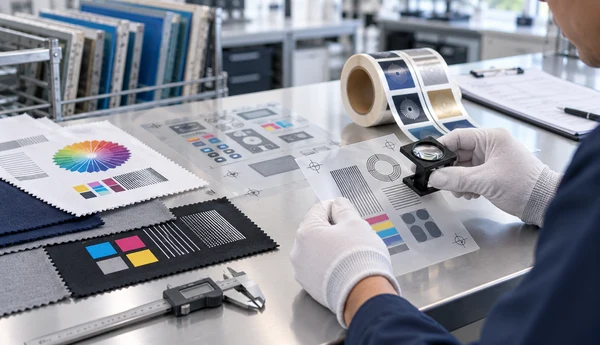
The most reliable evaluation costs you nothing: send your own material (label stock, film, fabric) to each finalist and have them print your artwork. Compare registration, ink coverage, curing, and repeatability, and watch how each manufacturer communicates during the test. Serious makers invite this. Winshol offers free sample testing as standard practice, as do established brands across this list. A manufacturer who refuses to print your sample before payment is telling you something.
Frequently Asked Questions
Seven questions buyers ask most, answered in plain language.
1.Who is the largest screen printing machine manufacturer in the world?
M&R Printing Equipment (United States) is widely described in industry reports as the largest screen printing machine manufacturer in the world. MHM (Austria) and ROQ (Portugal) are the closest European counterparts. “Largest” reflects scale, though. The right choice depends on what you print.
2.Which country makes the best screen printing machines?
No single country makes the best machines — the best screen printing machine brands cluster by specialty. The United States (M&R, Anatol) and Europe (MHM, ROQ) lead textile automatics; Japan and Germany (Sakurai, SPS Technoscreen, THIEME) lead precision industrial printing; Taiwan and China (ATMA Champ, Winshol) offer strong value in roll-to-roll and label printing. India has domestic makers too, such as P3 Machinery. Match the country to your application.
3.How much does an industrial screen printing machine cost?
Industry estimates put fully automatic industrial screen printing machines anywhere from tens of thousands of US dollars to more than USD 250,000 per line. The figure depends mainly on the number of colors or print stations, automation level, and configuration: CCD registration, UV curing, and inline cold foil all add cost. Semi-automatic machines cost considerably less.
4.What is the difference between textile and industrial screen printing machines?
Textile machines are carousel or oval presses for garments: they print plastisol and water-based inks on soft fabric at fabric-friendly tolerances. Industrial machines are flatbed or cylinder presses built for rigid or delicate substrates, such as glass, film, PCBs, and membrane switches, with tighter registration and substrate handling engineered per material. The two classes rarely substitute for each other.
5.Are Chinese screen printing machine manufacturers reliable?
Quality varies company by company, so judge each one on evidence. Request ISO 9001 and CE certificates for the exact model, ask for the component list (Winshol, for example, uses Fuji servo motors), call references in your region, and insist on sample testing before payment. That checklist separates established manufacturers from trading companies in one round.
6.What is a roll-to-roll screen printing machine?
A roll-to-roll (web-fed) screen printing machine prints on flexible material fed from a roll — labels, packaging films, foils, membrane films — and rewinds it after printing and curing, instead of feeding cut sheets one by one. It is the standard equipment for label and flexible packaging production, usually paired with UV curing, registration sensors, and inline cold foil.
7.How do I verify a screen printing machine manufacturer before buying?
Verify in this order:
- Ask for ISO 9001 and CE certificates for your exact model.
- Request references from customers in your country and call them.
- Do a video walkthrough or factory audit.
- Send your own material for a sample test.
- Get spare-parts lead times and warranty terms in writing.
A manufacturer that passes all five checks is a safe bet.
For more questions on inks, web widths, and curing, a dedicated screen printing machine FAQ is worth a look.
