






Screen Printing Machine Spare Parts: What to Agree Before Shipment
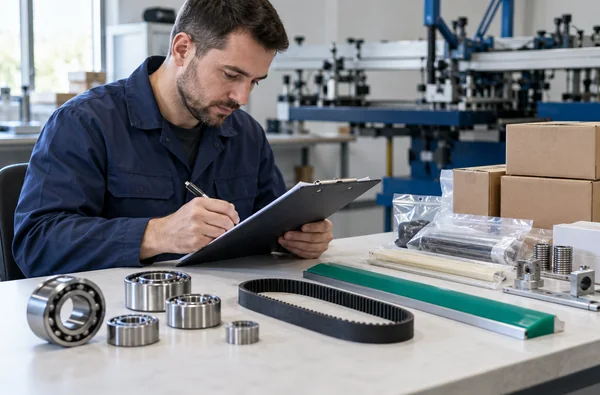
Before a screen printing machine ships, agree a parts list tied to its final configuration, identify which items to keep locally, and document how each replacement is ordered and installed. A box labelled “spares” is not enough: the buyer needs to know what each item fits, why it is included and what is still needed to return the line to production.
This guide is a proposed purchasing checklist for industrial film and label printing equipment. It does not prescribe a universal spare-parts kit or report Winshol component lifetimes.
Start with the machine identity, not a generic parts catalogue
Put the machine model, serial number and supplied modules at the top of the list. Include the final configuration reference and document revision. For a connected line, identify which parts belong to the printer, dryer, unwinder, rewinder or other supplied module.
M&R’s screen-printing equipment FAQ explains that components can change during a model’s production life and recommends starting a parts search with the equipment serial number. Use this identification principle when specifying your own parts records; M&R’s catalogue does not describe Winshol equipment.
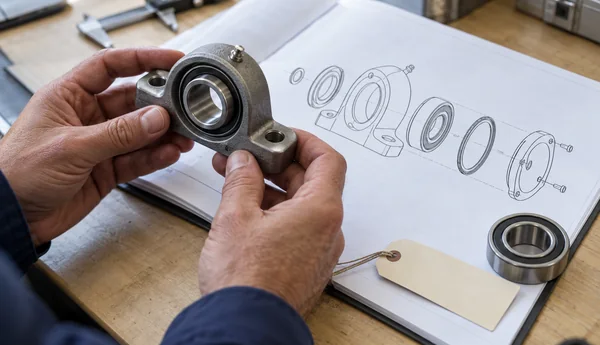
Ask for an annotated drawing or photograph showing where each part fits. Keep the supplier’s order code alongside the component maker’s identification when both are relevant. A photograph helps locate an item, but it should not replace written compatibility confirmation.
Separate wear items from parts that determine recovery time
Review the proposed kit with the supplier and your maintenance team. The following groups are a planning aid; the actual items depend on the equipment and production route.
| Group | What the buyer should establish | Purchasing decision |
|---|---|---|
| Routine wear items and consumables | Approved specification, inspection or replacement guidance, use pattern and storage conditions | Agree an initial quantity and a reorder method based on the intended work. |
| Parts that can stop the line | Failure consequence, availability, replenishment time and replacement skill | Decide which confirmed items justify local stock. |
| Configured components or assemblies | Revision compatibility, required settings and commissioning support | Clarify whether a stocked item is ready to install or needs supplier preparation. |
| Optional tooling and change parts | Which planned jobs require them and whether they are included | Keep production options separate from breakdown spares. |
For example, an approved spare squeegee blade is a different purchase from a replacement control assembly. The blade still needs the correct grade, profile and holder fit; the assembly may have additional configuration requirements. Confirm the actual components against your machine configuration. Use the squeegee specification guide for the blade-specific questions.
Ask for a parts schedule that can be used after delivery
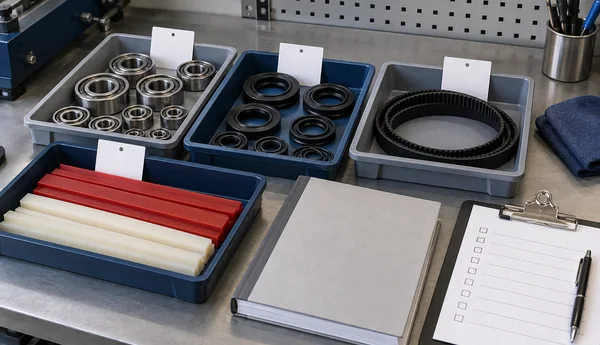
Make one row per orderable item. Request:
- Part description, supplier order code and applicable machine or module.
- Drawing reference or labelled location photograph.
- Revision or compatibility notes, where relevant.
- Quantity supplied and quantity proposed for local stock, with the reason.
- Storage conditions and any stated storage-life limits.
- Inspection or replacement guidance and the source document.
- Current replenishment estimate and the contact for checking it.
- Who may replace the item and what verification follows.
Leave unknown fields visibly open. Do not turn a suggested quantity into a service-life guarantee. For an industry example, HMI’s screen-printer spare-parts page describes using previous-build records to identify parts for an exact machine and offering equipment-specific kits. It also states that not every item is held in stock. Support for a part does not establish immediate availability. Confirm Winshol’s proposed kit and availability separately.
Compare recovery time, not just dispatch time
A supplier’s dispatch estimate does not include every step before the next acceptable print. Map the steps from diagnosis and part confirmation through preparation, transport, installation and restart approval. Record which steps depend on local personnel and which need supplier assistance.
For overseas installations, agree the delivery destination and commercial responsibilities rather than assuming that “parts available” means delivered to your factory. Keep the supplier’s current estimate separate from any contractual commitment. Confirm how urgent requests are handled and which working hours apply; do not infer round-the-clock service.
For a configured replacement, ask what documentation, settings or authorized support must accompany it. Do not treat possession of a spare as permission to open an electrical cabinet or perform work beyond the technician’s qualifications. Follow the equipment supplier’s safe maintenance instructions.
Keep warranty and purchased stock separate
A spare bought with the machine and a part supplied following an accepted warranty claim are different arrangements. Ask for the treatment of wear items, troubleshooting, freight and installation labor in writing. Show these costs and responsibilities separately in the quotation.
Document how substitutions will be reviewed. A replacement that looks similar may have a different revision or operating specification. Ask for compatibility confirmation and update the parts record when an approved change is made. Keep the old identification in the history so later orders do not revert to an obsolete item.
Check the handover while the configuration is still fresh
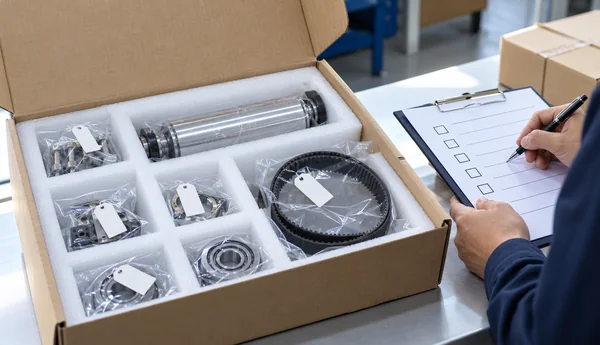
Before shipment, reconcile the final parts list with the packed kit and the documentation delivered with the machine. On arrival, check quantities, labels and packaging condition, then store the items according to their instructions. Give the maintenance team access to the same revision of the list used by purchasing.
Choose one item and walk through a paper-only reorder exercise: can the team identify its location, find the correct code and reach the named support contact? No purchase or machine intervention is needed. Resolve any missing codes or contacts before the equipment enters production.
Winshol’s OEM/ODM and custom-engineering page lists spare-parts documentation and describes support responsibilities as project-specific. Send the proposed machine configuration, destination, operating pattern and local maintenance resources for review. Request an itemized kit and support scope; do not assume a published stock level, delivery deadline or fixed kit quantity.
Use the machine RFQ checklist for the wider equipment enquiry. Attach this parts schedule as a separate handover requirement so that it remains visible when the order is finalized.
Frequently asked questions
1. Which spare parts should come with a new screen printing machine?
Agree a machine-specific list rather than a standard box for every model. Separate routine wear items from parts whose absence would stop the agreed production route. Record the part numbers, quantities, reasons for stocking and replacement responsibilities in the purchase scope.
2. Is the machine model enough to order a replacement part?
Not always. Send the serial number, configuration or revision, component identification and its position on the machine. A model name can cover different production versions. Ask the supplier to confirm compatibility before placing the order.
3. Should I buy one spare of every component?
Not automatically. Review the consequence of failure, expected use, replenishment time, storage requirements and whether your team can install the part. An expensive assembly that needs supplier configuration may call for a service arrangement rather than an unprepared spare on a shelf.
4. Are spare parts included in the machine warranty?
Do not assume so. Ask which supplied items are purchased spares, which are consumables and how warranty claims are handled. Confirm parts, freight, labor and diagnostic support separately in the written agreement.
5. Does an available spare mean production can restart immediately?
No. Identification, dispatch, transport, installation and checks before production release are separate steps. Some replacements may also require settings or supplier assistance. Confirm the complete recovery process, not only whether a part can be ordered.
6. Can I use a locally sourced equivalent part?
Ask the machine supplier to confirm the proposed substitution against the exact application and configuration. Similar dimensions or a matching connector are not sufficient evidence of compatibility. Do not substitute safety-related components without the required qualified review.
7. What should be checked when the spare-parts box arrives?
Match each item to the agreed list, including part number, revision where relevant, quantity and label. Check packaging condition and storage instructions. Record shortages or identification differences before putting the items into inventory.
8. What spare-parts support does Winshol offer?
Winshol’s OEM/ODM page lists spare-parts documentation and describes service responsibilities as project-specific. Request a parts list and support proposal for the exact configuration and destination. That page does not establish a universal stock quantity, delivery time or warranty entitlement.