






What Is the Best Screen Printing Machine? 7 Factors to Compare Before You Buy
The best screen printing machine is the one that can produce your required print quality on your actual material, at a workable cost per accepted piece. For industrial buyers, that means choosing the right feeding format and printing process before comparing brands, automation levels or advertised speeds.
A roll-to-roll line belongs on the shortlist when material arrives as a continuous web and the job needs controlled feeding, printing, curing or drying, and winding. Sheet-fed work needs a different handling arrangement. A machine designed for garment printing should not be treated as an alternative to a label-printing line simply because both use screens.
This guide focuses on industrial labels, films and sheet-based applications. It is a purchasing framework published by Winshol, not an independent brand ranking. The seven factors below help you eliminate unsuitable configurations and compare the remaining offers on the same basis.
Start with the application, not a “best machine” list
| Your production task | Machine family to investigate | What must be confirmed |
|---|---|---|
| Printing roll-fed labels or flexible films | Roll-to-roll screen printing line | Web handling, usable image area, repeat, registration reference, drying and finished-roll requirements |
| Printing or adding an effect to individual sheets | Sheet-fed flatbed or cylinder screen printing system | Sheet size and condition, positioning, ink transfer, drying and delivery |
| Adding a print to previously printed material | A configuration with a suitable registration method | The actual reference marks or image features, material movement and required finished alignment |
| Printing garments or three-dimensional objects | A specialist system for that product | Part support, loading, ink system and the complete production process; do not assume an industrial web line is suitable |
These are starting points, not automatic recommendations. For example, “roll-to-roll” describes material handling; it does not tell you whether the printing mechanism uses a flat screen or a rotary screen. A sheet-fed cylinder press is also not the same thing as rotary-screen printing. SPS TechnoScreen separately lists cylinder screen printing equipment, illustrating why buyers should ask for a process description rather than rely on the word “cylinder.”
1. Match the machine to the actual material and feed format
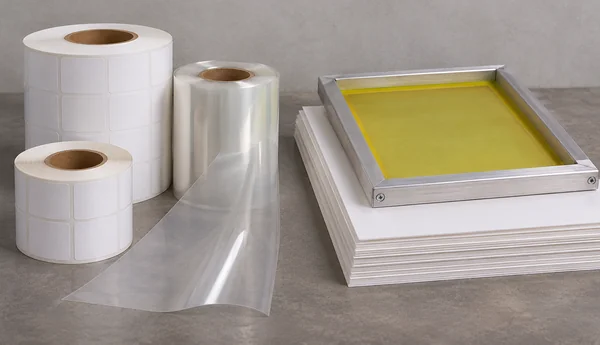
Begin with a production sample and its specification. “Film,” “paper” or “label stock” is too broad to establish suitability. A coating, adhesive layer or liner can change the way a material feeds and responds to printing and drying.
For roll-to-roll work, describe the web construction, thickness, width, core size, roll diameter and weight. Add the required winding direction and identify any preprinted layer. Ask the supplier to review the full roll-handling path, including the condition of the material after curing and rewinding.
For sheet-fed work, provide sheet dimensions, thickness, flatness and the required delivery condition. Include a representative sheet after any earlier production process. A clean, flat blank may not reveal the handling problems of the real job.
Reject a configuration if material handling remains unproven. A faster print stroke will not compensate for unstable feeding or damaged material.
2. Check usable print area, repeat and the complete print sequence
Maximum material width and maximum image area are different dimensions. The artwork must fit after allowing for the margins, marks and handling requirements of the proposed setup. On an intermittent roll-fed line, check feed length and print repeat as well.
Draw the job as a sequence: incoming material, each screen-printed layer, any intermediate treatment, final curing or drying, and delivery. A white layer, an adhesive or a varnish can require a printing operation even when the buyer describes the artwork as “one color.” Ask which operations the quotation actually includes.
Winshol’s WL-350D UV product page, for example, describes a single-color UV configuration. The WL-350S page describes a two-color UV configuration. These are useful distinctions for shortlisting, not proof that either setup is suitable for every job with that color count.
Use the roll-to-roll configuration comparison to identify candidate models, then review the actual artwork with the supplier. Specify the full configuration name, including UV or oven drying, rather than only a shared model code.
3. Define registration by the finished result you need
Write down what must align with what. It might be one screen color against another, a new layer against existing print, or a printed image against a later converting operation. Those are different acceptance questions.
A statement such as “high precision” is not a measurable requirement. Give the supplier the reference feature, the location of the measurement and the allowed deviation for the finished product. If the job uses preprinted rolls, include the actual marks and winding direction.
Camera-based registration may be relevant, but a camera label alone does not establish suitability. The system must identify the available reference on the real material, and the machine must correct the movement that matters. Agree how the trial will check alignment across a representative run, not just on one selected sample.
The detailed CCD versus three-point registration guide can help frame the discussion. Neither method should be declared universally better without the application requirements.
4. Select the ink and curing route together
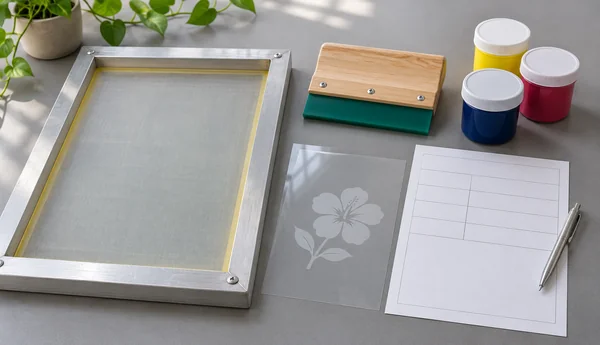
Do not choose UV or oven drying from the machine price alone. Start with the intended ink, substrate and finished-use requirements. Check the ink manufacturer’s current technical data sheet and safety information, then confirm that the proposed line provides the required process conditions.
Ink adhesion is not determined by curing equipment alone. Marabu identifies ink choice, application and surface pretreatment among the factors affecting adhesion in its UV screen ink guidance. Its Ultra Graph UVSP technical data sheet also describes curing as dependent on the equipment, ink layer, shade, substrate and operating speed. Those conditions are ink-specific, not universal machine settings.
Ask for a trial using the intended material and ink. Define when and how appearance, adhesion and any required resistance will be assessed. For roll-fed material, also examine the finished roll for relevant defects after winding. A visually dry print is not, by itself, a complete acceptance result.
Before ordering, confirm utility and site requirements for the whole line. A main-machine power rating does not describe every dryer, exhaust connection or ancillary device.
5. Compare accepted output across your real job mix
Advertised mechanical speed is a poor basis for comparing machines unless the test conditions match. A supplier may quote cycles per minute, web speed, sheets per hour or finished pieces per hour. These are not interchangeable.
Use one measure for the purchase decision:
A buyer with frequent short runs should examine changeover time as closely as running speed. A buyer with long repeat runs should look at sustained feeding, curing and accepted yield. Neither buyer should use a brief demonstration as a daily-output forecast.
Ask suppliers to assess the same representative jobs. Record the actual configuration and the time included in the result. Keep the detailed calculation in the roll-to-roll output guide; here, the purchasing decision is whether the complete line meets your production requirement under agreed conditions.
6. Buy the level of automation your team can operate
Automation should address a defined production problem. Identify the tasks that consume operator time or create inconsistency, then ask which of them the proposed equipment controls.
For a roll-to-roll purchase, check what is included in unwinding, feeding, printing, curing and rewinding. Inspection, cutting, cold foil and other finishing equipment should appear explicitly in the supply list if required. Do not infer them from a product photograph or a general catalogue illustration.
Review how operators set up a new job, recover after a stoppage and restore approved settings. Ask for a training plan that matches your staff, language and shift pattern. Screen preparation, ink handling and cleaning still need an operating plan even when material feeding is automatic.
If the team or order book cannot yet support the proposed line, compare a simpler configuration or continued outsourcing. The in-house versus outsourced screen printing guide covers that earlier investment decision.
7. Compare ownership cost and the evidence behind the quotation
Request an itemized quotation against one written job brief. Separate the machine price from tooling, drying equipment, transport, installation, training and any required site preparation. Confirm exclusions and recurring consumables.
Then check how the line will be supported. Ask which documents and backups are supplied, how replacement parts are identified, what the warranty covers, and who handles installation and service in your location. Obtain the answers in writing rather than assuming they are included in the advertised price.
A useful evidence package contains a configuration list, a complete line layout, utility requirements and a trial record tied to the agreed job. It should identify what was tested and what remains unverified. A catalogue or demonstration video can introduce a machine, but neither replaces an agreed acceptance procedure.
Compare cost per accepted piece using your own expected work, labor and utilization. Do not apply an invented universal payback period. If two offers have different scope or test conditions, resolve those differences before treating the cheaper total as better value.
Turn the seven factors into a shortlist
First eliminate configurations that fail a mandatory requirement. Then compare the remaining options on accepted output, job-change effort, ownership cost and support. This prevents an attractive price from outweighing a material or quality mismatch.
| Decision stage | Evidence to request | Reason to stop or clarify |
|---|---|---|
| Application fit | Material review, artwork fit and complete print sequence | The supplier has assessed a different material, format or job |
| Process fit | Registration method, ink/drying review and agreed trial conditions | Claims depend on unspecified settings or a different configuration |
| Production fit | Accepted output with defined time boundaries, changeover and staffing needs | Only maximum speed or a short selected demonstration is offered |
| Purchase readiness | Itemized scope, site requirements, acceptance procedure and support terms | Required equipment or responsibilities remain unclear |
For a Winshol configuration review, prepare the substrate specification, production sample, artwork, print sequence, required alignment, target accepted output and site information. Use the RFQ checklist, browse the product catalogue, or request a machine recommendation. The recommendation should follow the job review; a model name alone is not an acceptance commitment.
Frequently asked questions
1. What is the best screen printing machine for industrial use?
It is a configuration that matches the material, print sequence, quality requirement and production workload at an acceptable ownership cost. Select the machine family first, then compare equivalent configurations using representative material and agreed acceptance conditions. There is no single model that is best for all industrial applications.
2. When should I consider a roll-to-roll screen printing machine?
Consider a roll-to-roll line when the material is supplied as a continuous web and the required workflow includes controlled feeding, printing, curing or drying, and roll delivery. Confirm the actual web construction, roll dimensions, artwork, registration requirements and downstream process before selecting a configuration.
3. Is roll-to-roll screen printing the same as rotary screen printing?
No. Roll-to-roll describes how material is handled. Rotary screen printing describes a printing mechanism using a rotating screen. A roll-fed line can use a different screen-printing mechanism, so request a process description instead of treating the terms as interchangeable.
4. Is an automatic machine always better than a simpler machine?
No. Automation is useful when it addresses the workload and tasks that matter to the buyer. Compare setup, staffing, cleaning, training and accepted output across the actual job mix. Additional automation that does not solve a production need can add cost without a useful return.
5. How do I choose between UV curing and oven drying?
Start with the intended ink, substrate and finished-use requirements. Check the current ink technical data sheet, confirm the proposed equipment can provide the required conditions, and assess representative samples. Do not select the drying route from price or a shared machine model code alone.
6. How should I compare production speed between quotations?
Compare accepted finished output over the same defined time period and under comparable job conditions. State whether setup, cleaning, stoppages and inspection are included. Mechanical cycles, web speed and finished pieces per hour describe different things and should not be compared directly.
7. What should I send before asking for a machine recommendation?
Send the material specification and sample, artwork dimensions and repeat, print sequence, ink information, alignment requirement and target accepted output. Add roll or sheet dimensions, required finishing, available space and utilities. Identify which requirements are mandatory and which remain open for discussion.
8. What evidence should I request before placing an order?
Request an itemized equipment scope, complete line layout and utilities, a trial record for the agreed job, and a written acceptance procedure. Confirm documentation, training, warranty and service responsibilities. Treat untested requirements as unresolved rather than assuming a catalogue or demonstration proves them.