





How to Specify Color Measurement for Screen-Printed Film Trials
Before a screen-printing trial, agree on the physical color reference, the sample construction, the measurement method and the acceptance rule. A requirement such as “match this color” or “Delta E below the limit” is incomplete if the buyer and supplier measure different surfaces or use different settings.
This guide helps buyers prepare a measurement agreement for ordinary printed colors on film. The proposed checks are not a test standard or a report of Winshol results, and they do not establish a machine’s color accuracy. Metallic, magnetic and other effect finishes may need a different evaluation method.
What exactly will the measurement approve?
Decide what is being approved: an ink sample, a printed color patch, the finished label or repeatability during a machine trial. An acceptable ink sample is useful reference material. Whether the complete process can reproduce it is a separate question.
Assign a reference version and a person responsible for approving it. Identify the printed side and the construction to be measured: film, ink layers, any white underprint and any finishing layer. If the product will be judged after application to another surface, include that condition in the approval plan where required.
Marabu’s custom-color process illustrates why a color name alone is insufficient: its information request includes the mesh, auxiliaries, printing material and its color, drying and desired gloss. It prints a sample on the intended material for approval. This is an ink supplier’s process, not evidence that Winshol uses Marabu inks.
For clear-label application checks, see the existing clear-label machine selection guide. The additional question here is how two parties will obtain comparable color measurements from the agreed construction.
Define a method both parties can reproduce
The instrument supplier or color-quality specialist should select a method suited to the film and the feature being approved. A mode copied from another job’s report may not answer the same question. Resolve suitability before collecting acceptance readings.
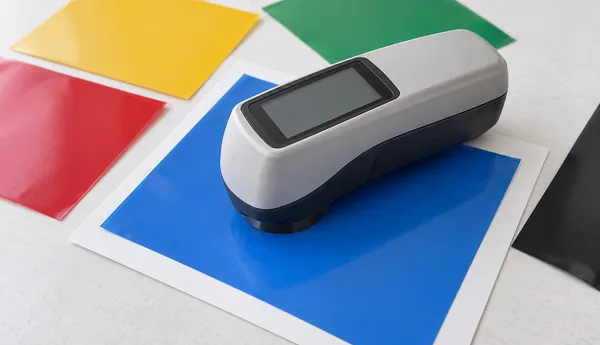
On the method sheet, identify the instrument, measurement geometry, aperture, operating mode, illuminant and observer settings where applicable. Add the required instrument checks and sample preparation. Where the two organizations use different equipment, establish how they will check comparability before relying on the results for acceptance.
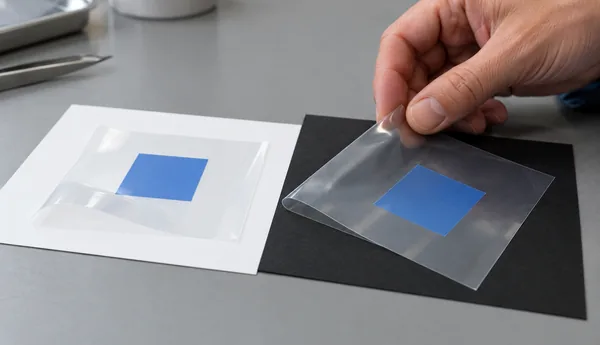
For film that is not fully opaque, identify the measurement backing by its material and condition; “white background” leaves room for interpretation. Have the specialist specify the measurement side and decide whether orientation and sample support need to be controlled for this method. Put those instructions beside the instrument settings. Datacolor’s definition of opacity explains the relevance of the background to a material’s hiding power.
A photograph or drawing of the approved sample arrangement helps the next operator reproduce it. Keep it with the written settings and instrument instructions.
Put the acceptance conditions on one record
The following is a proposed record for the buyer, printer and measurement provider to complete together. It is not a list of equipment supplied as standard with a Winshol press.
| Record | What to agree before the trial | What to retain |
|---|---|---|
| Decision and reference | Which item is being approved; reference identity and revision | Approved reference and reviewer |
| Sample construction | Film, print side, layer sequence and finishing condition | Identified sample and construction record |
| Physical measurement setup | Backing, orientation, sample support and measurement locations | Method sheet and setup image |
| Instrument settings | Instrument, geometry, aperture, mode and applicable color settings | Settings and required instrument-check record |
| Readings and traceability | Sample IDs, measurement positions and number of readings | Each result linked to its sample and location |
| Color-difference rule | Formula, agreed limit and any additional color requirements | Individual results, not just “pass” |
| Visual decision | Viewing conditions, reference and responsible reviewer | Visual decision and reason for any exception |
| Disagreement procedure | Who remeasures and which method controls the decision | Original and repeated results with an explanation |
Specify the Delta E formula and limit together
Delta E expresses a color difference, but the formula is part of the result. Do not compare reports merely because both display “ΔE.” Confirm that they use the agreed calculation and measurement conditions.
Datacolor’s tolerance guidance explains that there is no universal acceptable value: material, application and customer expectations matter. It recommends defining the formula, measurement conditions, preparation and the relationship between instrumental and visual assessment. Its CIELAB and CIE2000 explanation provides further background on the calculations.
The customer or color-quality owner must approve the limit for this job. A number copied from an unrelated print process, or inferred from a machine brochure, is not an agreed tolerance. Until acceptance conditions are settled, report trial measurements for review without declaring the color qualified.
Resolve a measurement disagreement before adjusting the press
If the buyer rejects a sample marked acceptable on the supplier’s report, compare the reference versions, sample identifiers and methods first. Did both parties measure the same construction with the agreed settings? Resolve any procedural difference before attributing the disagreement to the press.
Repeat the check on retained samples and keep the original results alongside the rerun. Record any change in procedure and the reviewer’s explanation. When the numerical result passes but the appearance remains unacceptable, the visual-review procedure should determine the next step. Neither result should disappear from the record.
For specialty finishes, ask the measurement provider whether an ordinary color-difference assessment is sufficient. The existing magnetic-effect printing guide covers the separate issue of evaluating a directional visual effect. A pass on a plain color patch does not approve that effect.
Separate measurement responsibility from machine supply
Winshol’s OEM/ODM and custom-engineering page describes application-specific testing methods and acceptance criteria. For a proposed project, ask who will provide the color-measurement equipment, reference samples, method and report. Do not assume that a spectrophotometer, online color control or third-party testing is included.
Send the production artwork, material construction, ink information, physical reference and proposed measurement agreement with the trial request. The response should identify the work Winshol will perform and the checks assigned to the buyer, ink supplier or independent measurement provider. Settle those responsibilities before the trial.

Frequently asked questions
1. Is a color code enough to approve screen-printed film?
No. Identify the reference, printed construction and evaluation conditions as well. A color code can communicate the intended shade, but it does not describe the film, ink layers, finishing condition or measurement method used for acceptance.
2. What Delta E limit should I request?
Have the customer or color-quality owner agree a limit for the actual application and the stated formula. This guide does not recommend a universal value. Confirm the measurement conditions and visual requirements before treating the number as a pass/fail rule.
3. Can two Delta E reports be compared directly?
Only after checking their basis. Confirm the reference, sample construction, calculation and measurement conditions. If instruments or methods differ, agree how comparability will be established before using the reports to resolve an acceptance decision.
4. Why specify the backing behind the film?
For a construction that is not fully opaque, the background can affect the evaluated appearance. Have the measurement specialist define a suitable backing and record it consistently. Do not change the backing between reference and trial measurements without reviewing the method.
5. Does an acceptable ink sample prove machine-trial color consistency?
No. Ink-sample approval and a production-process trial answer different questions. Identify which approval is being given, then evaluate trial samples using the agreed construction and method. Keep the relevant results and sample identities with the trial record.
6. What if the instrument passes a sample but the buyer dislikes its appearance?
Follow the agreed visual-review and disagreement procedure. Check the reference, viewing conditions and measurement method, then document the reviewer’s decision. Do not silently discard the numerical result or override the buyer’s appearance requirement with an unexplained pass mark.
7. Can the same method approve metallic or magnetic effects?
Do not assume so. Ask the measurement provider how the specific effect should be evaluated and whether additional viewing conditions or equipment are needed. Approval of an ordinary printed color does not automatically approve a directional or specialty finish.
8. Does Winshol supply the color-measurement equipment for a trial?
That needs confirmation in the project scope. The public information cited here does not establish that a spectrophotometer, online color-control system or independent testing is included. Name the parties responsible for the equipment, method, measurements and final approval before the trial.