






Screen Tension and Off-Contact: What to Check Before a Film-Printing Trial
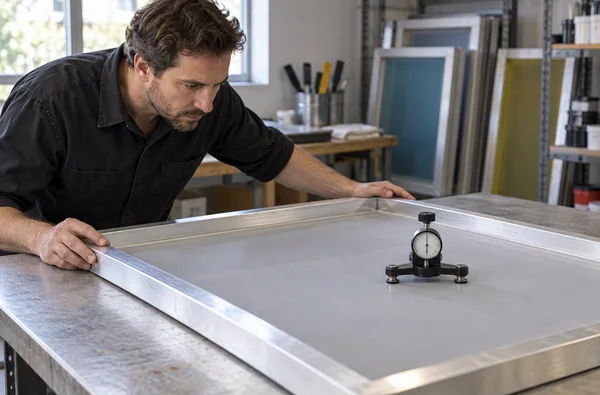
Check screen tension before adjusting off-contact. Record how the tension was measured and the gap installed on the press, then test the combination with the production film. Keep those measurements with the settings and accepted prints so a replacement screen can be checked against the same record.
When buying screens or evaluating a film-printing line, ask the screen maker and equipment supplier how they will reproduce the approved setup. The proposed checks below help define their responsibilities. Agree on the limits for your job; this is not a universal test standard or a report of Winshol test results.
Separate screen tension, off-contact and web tension
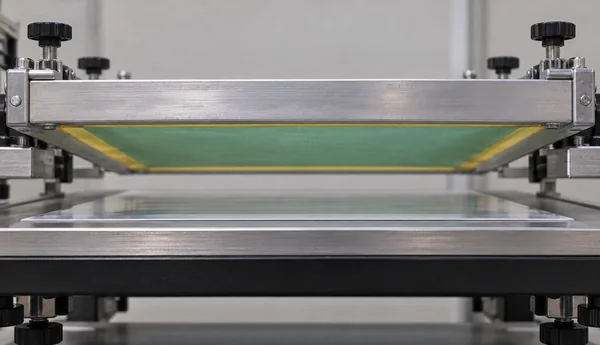
Screen tension is the tension in the mesh stretched across its frame. Off-contact is the gap between the screen and the printing surface before the printing stroke. Web tension is the force applied to the roll-fed material along its transport path.
These variables need separate records. A web-tension setting does not describe the screen, and a screen-tension reading does not establish the installed gap. If an enquiry says only “check tension,” identify which one is meant.
The ink and substrate also matter. BOPP’s screen-printing technical guidance identifies mesh tension, ink viscosity, squeegee speed and the image itself as factors affecting off-contact. It therefore does not give one general gap or pressure setting. Its guidance favors the smallest workable gap and minimum necessary squeegee pressure, with small gap adjustments when ink release is inadequate.
BOPP discusses stainless-steel meshes. Do not copy its product-specific tension values into an order for a different mesh construction.
Record the condition of the prepared screen
Start with the approved screen identity. Keep the manufacturer and mesh code, frame drawing, image position and stencil specification together. The mesh selection guide covers the fabric details; the checks here concern the prepared screen and its condition when used.
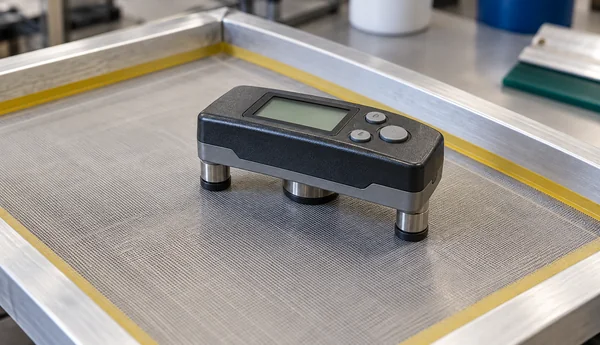
Ask the screen maker to distinguish a stretching target from a reading on the completed screen. Also identify when the measurement was taken: before coating, after screen preparation, before the trial or after an agreed reuse sequence. Keep those stages identifiable when comparing the results.
Keep the individual readings at each agreed position. An average can hide differences across the screen. Label the two thread directions on the drawing so that a later operator can repeat the measurement orientation. Have the screen maker and instrument supplier agree on suitable positions, clearances and handling for the actual screen.
SEFAR’s measurement-equipment guidance describes repeatable tension measurement, documentation and reference checks. Its instrument-manual page provides model-specific instructions. Follow the instructions for the instrument being used; a reference check is not a reason to disregard its calibration or service requirements.
Agree on the evidence before comparing suppliers
Give purchasing, the screen maker and the trial operator the same drawing and record revision.
| Check | Incomplete evidence | More useful evidence |
|---|---|---|
| Screen identity | “Same mesh as last time” | Screen ID, mesh product code, frame drawing, image revision and stencil record |
| Measurement stage | One undated tension value | Date, screen condition and stage at which readings were taken |
| Measurement method | “Checked with a meter” | Instrument identification, applicable reference checks, units and procedure |
| Tension distribution | A center reading or unexplained average | Individual results at agreed mapped positions, with thread directions identified |
| Installed gap | A dial position copied from another job | Defined reference surface, safe measurement method and readings at agreed locations |
| Printing result | One attractive sample | Identified samples assessed against agreed release, image and finished-print requirements |
| Repeat installation | “The settings were saved” | Record of the screen being removed, reinstalled and checked again |
| Approval | “Passed” | Approved configuration, review limits, retained samples and responsible reviewer |
Ask the screen maker to recommend tension limits for the mesh and frame. Confirm them through printing on the proposed press before using them to accept replacement screens.
SAATI’s stretching-equipment information highlights uniform tension without overtensioning the corners and describes control of the warp and weft directions. Ask for the supplied screen’s measurement results as well as information about the stretching process.
Check the installed gap against the printing surface
Measure the gap relative to the material being printed, with the production support arrangement in place. A reading referenced to an empty bed may differ from the gap above the loaded film. State the reference surface in the procedure.
Ask the machine supplier to demonstrate the approved measurement procedure. Establish the machine position, measurement locations and any restrictions imposed by the screen or stencil. Do not prescribe one measuring tool for every press.
Take physical measurements only with the machine stopped and placed in the safe condition required by its instructions. Follow the specified isolation procedure where access creates a hazard. Never reach into the printing area or bypass guards to inspect release during operation. Any observation while running should use a viewing method approved by the machine supplier.
Keep measured gap values separate from adjustment settings. Record both where available, but do not assume that matching a displayed value proves the same physical gap after changing a screen, substrate or support.
For a multistation line, identify the station on every record. One station’s measurements should not stand in for the others.
Check release and image accuracy during the trial
Before printing, agree which features will determine acceptance. Depending on the application, these might include image dimensions, alignment to an existing layer, edge definition, solid-area appearance or another customer requirement. Mark the inspection locations on the artwork.
Use the following sequence as a starting point for the agreed trial:
- Identify the reference setup. Record the screen, substrate, ink, squeegee assembly and production artwork. If a qualified setup already exists, retain its sample and settings as the reference.
- Check the screen and installed gap. Complete the agreed measurements using the safe procedures. Resolve unexplained differences before treating the setup as equivalent.
- Print under documented conditions. Record the stroke settings and relevant material conditions. The ink-viscosity guide explains why an ink reading also needs a defined method.
- Assess release and the printed image. Use the approved observation method and inspect the agreed features. Keep the measured results with the sample identifiers.
- Record adjustments separately. Change one variable at a time where practical. If several settings must change, record the sequence rather than attributing the result to gap alone.
- Repeat the relevant installation or reuse step. Where production involves storing and reinstalling screens, include that sequence in qualification and repeat the agreed checks.
Choose the sampling plan and run conditions around the intended production job. A few acceptable startup prints do not establish long-run repeatability.

Investigate poor release before changing the gap
If release becomes poor, compare the setup with the approved record before making another adjustment. Check the screen identity and readings, installed gap, ink preparation and blade condition. Review the stroke settings too.
A tension reading within range does not rule out an ink, blade or other process problem. And if the operator needs several adjustments to make a replacement screen print acceptably, keep that adjustment history. The new setup may need its own qualification.
Put the machine supplier’s responsibilities in writing
Winshol’s WL-350S two-color screen printer is one roll-fed configuration to discuss when the job requires two printing stations. Its published frame and print-format information helps establish compatibility. Those dimensions do not specify a tension-control system or prove how off-contact will be measured and reproduced.
Ask the supplier to confirm:
- The approved frame interface and any clearance requirements.
- How off-contact is adjusted, checked and recorded on the quoted configuration.
- Which checks must be repeated after changing the screen or material.
- Whether measuring instruments, screen-preparation services or trial screens are included.
- Who supplies replacement screens and approves a change to their specification.
If automatic adjustment, position feedback or stored settings are required, request explicit confirmation in the quotation. Do not infer those features from a model name or a general description of automation.
Send Winshol the production artwork, substrate and ink details, existing screen specification and the results you need to verify. Include any retained good and defective samples. Ask which screen and gap checks will be included in the trial and who will review the results.
Frequently asked questions
1. What screen tension should I specify for industrial film printing?
Use a range recommended for the exact mesh and frame, then qualify it with the intended printing process. State the measurement method and stage with the requirement. A stretching target, a completed-screen reading and a used-screen reading should not be treated as interchangeable without agreement.
2. Is one center reading enough to approve a screen?
It cannot describe variation elsewhere on the screen. Agree on mapped measurement positions and record the relevant thread directions using the instrument’s instructions. Keep individual readings so that the reviewer can see differences an average might hide.
3. Is screen tension the same as web tension?
No. Screen tension concerns the mesh on its frame; web tension concerns the roll-fed substrate along the machine path. Record each with its own units and measurement method. Adjusting web tension does not demonstrate that the screen meets its specification.
4. What off-contact distance should a film-printing machine use?
There is no universal distance for every screen, ink, image and substrate. Have the equipment supplier establish a workable setting during the representative trial and document how it is measured. Do not transfer a garment-printing recommendation or another machine’s dial value directly to an industrial film job.
5. Should I increase off-contact whenever the screen releases poorly?
Not automatically. Check the screen condition and compare the installed setup, ink preparation and stroke settings with the approved record. Any adjustment should be controlled and its effect assessed on the print. A larger gap should not become an undocumented workaround for a changed screen or another unresolved variable.
6. Can a stored machine setting replace physical checks?
A stored setting is useful setup information, but its meaning depends on the machine and the installed components. Ask what is actually stored and whether feedback verifies the physical position. After a screen or substrate change, perform the checks required by the approved procedure rather than assuming the saved value proves equivalence.
7. When should a screen be rechecked for repeat work?
Define the triggers in the job’s quality plan. They may include receiving a replacement screen, reinstalling a stored screen, an agreed cleaning or reuse cycle, visible damage or an unexplained print change. Use the screen supplier’s handling instructions and agreed limits; do not impose one replacement interval on every construction.
8. What should accompany a machine-trial request?
Provide the artwork, substrate construction, ink identification, mesh and frame details, stencil record and relevant retained samples. Add the tension-measurement method, available readings and the print acceptance requirements. Ask the supplier to confirm the safe gap-checking procedure, trial responsibilities and which equipment or services are included.