



Winshol · Equipment catalogue
Automatic Screen Printing Machines
Explore equipment for labels, films, packaging and industrial applications. Choose a machine family, then compare the process and material requirements with our engineering team.
Browse by applicationProduct categories
Browse by Machine Category
Choose a machine category based on your printing process, material format and finishing requirements.
Continuous web printing
Roll to Roll Screen Printing Machines for Labels & Films
Match the print sequence to the curing route. The WL-350D UV roll-to-roll screen printing machine is a single-color UV line, the WL-350S two-color UV has two screen-printing stations, and WL-350-3C lists three screen colors with UV drying. Oven variants use a different drying route. Check the production substrate, ink and artwork before comparing output. For a side-by-side overview, see WL-350D vs WL-350S vs WL-350DW. Start with the actual web construction, width, print area, repeat length and required finishing sequence. A model name does not define finished output or material compatibility. See the roll-to-roll selection guide before shortlisting a line. Compare the listed roll-to-roll configurationsChoose the complete configuration name, not the model code alone. Dimensions below are catalogue-listed limits, not confirmed artwork fit or production output.Screen colors, drying route and working dimensionsConfigurationColors / curing or dryingMax. web width (mm)Max. print area (mm)WL-350D UV1 / two-lamp UV350330 × 450WL-350D left-feed oven1 / oven350330 × 450WL-350D-Y right-feed oven1 / oven350330 × 450WL-350D-YT integrated UV1 / water-cooled two-lamp UV350330 × 450WL-350S UV2 / two UV units350330 × 450WL-350-3C UV3 / three UV units450330 × 450WL-5045S UV2 / two UV units500500 × 450WL-5045S oven2 / infrared + oven500500 × 450Before shortlisting: check artwork margins and repeat length separately from web width; confirm the selected ink and substrate against the curing route. UV and oven versions are separate configurations. Ask for the quoted line’s roll capacity, registration method, utility requirements and supplied downstream equipment. Do not assume CCD, cold foil or a complete finishing line is included.Browse the product catalogue · Prepare a comparable RFQ
View CategoryPrint alignment
Registration & CCD Screen Printing Machines
Screen printing systems for alignment to registration marks or existing printed features. This family includes both CCD-assisted and three-point registration configurations for film and electronic-material applications. Start with the reference method: WL-5080CCD lists left-side feeding with CCD visual registration, while WL-5080CCD-Y lists right-side unwinding with CCD visual registration. WL-5080DW uses three-point registration. These catalogue configurations form a shortlist, not an accuracy ranking. Provide the artwork, mark position and contrast, substrate sample, required finished alignment and preferred feed direction. Numerical registration performance must be evaluated for the complete job. Compare the approaches in the CCD versus three-point guide.
View CategoryDecorative finishing
Screen Printing & Cold Foil Machines
First separate foil finishing from a combined print-and-foil line. WL-350-LTJ is a horizontal cold-foil stamping unit, and WL-500TB-LTJ uses an intermittent cold-foil process. WL-350DW combines screen printing, automatic registration and vertical cold foil. The existing print stage and sample artwork decide which role belongs in the quotation. Share the label stock, artwork, foil coverage, adhesive, curing route and existing production stages before selecting equipment. Review the screen printing and cold-foil planning guide for a project brief.
View CategoryIndividual sheet handling
Sheet-Fed Screen Printing Machines
Automatic screen printing equipment for materials supplied as individual sheets. Choose the feeding and printing configuration around sheet size, stiffness, surface, print area and the handling required after printing. A sheet-fed print-area figure should not be compared with roll-to-roll web width as if they measure the same thing. If both material formats are possible, review the complete workflow in the sheet-fed versus roll-to-roll guide.
View CategoryApplication-specific processes
Specialty Screen Printing Machines
These configurations serve different material paths and effects. WL-350D-CK-3D is the magnetic-effect UV configuration, WL-500GT uses cylinder-bed handling, and WL-500XW combines inclined printing with hot-air drying. Review the actual material and effect sample; the model names do not make these processes interchangeable. For an engineering review, send the substrate and feed format, separate artwork layers, target effect, and the upstream and downstream equipment. The machine RFQ checklist identifies the remaining information to send.
View CategorySupporting equipment
Drying & Web Handling Equipment
Match the unit to the job: WL-500-YSS-KX pre-shrinks film; WL-500ZY-KX is an inline drying oven; and WL-650-HZL-KX is a constant-tension drying oven. WL-500JPDJ guides and rewinds the web rather than drying it. Confirm the material path and sample response before choosing. Specify the substrate, web width, ink or coating, required treatment, roll dimensions and the machine before and after the unit. Thermal limits and full installation requirements need a project review. Start with the UV curing versus hot-air drying guide where drying choice is still open. For thermal-oven selection, compare the pre-shrink, inline and constant-tension configurations and the sample evidence each requires.
View CategoryComplete machine range
All Screen Printing Machines
Browse six machines at a time. Use the page numbers below to continue through the complete range.
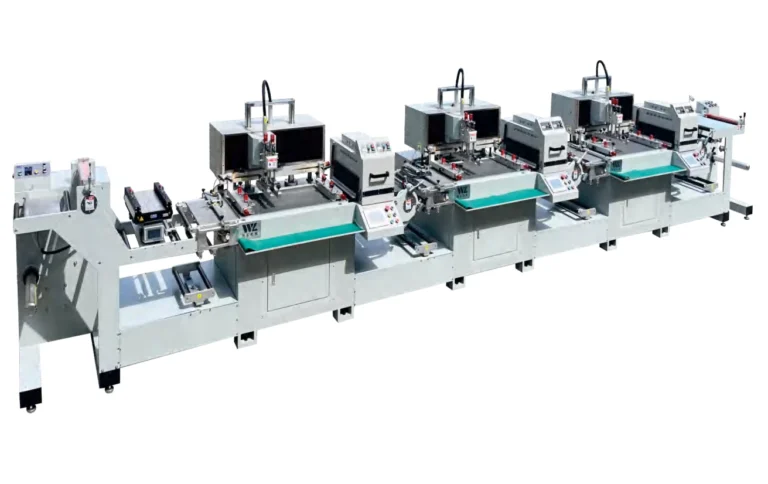
WL-350-3C
WL-350-3C Three-Color UV Roll-to-Roll Screen Printing Machine
Three-color roll-to-roll screen printing with three UV drying units and guided unwinding. Maximum print area: 330 × 450 mm, with a listed 450 mm web width.
View WL-350-3C details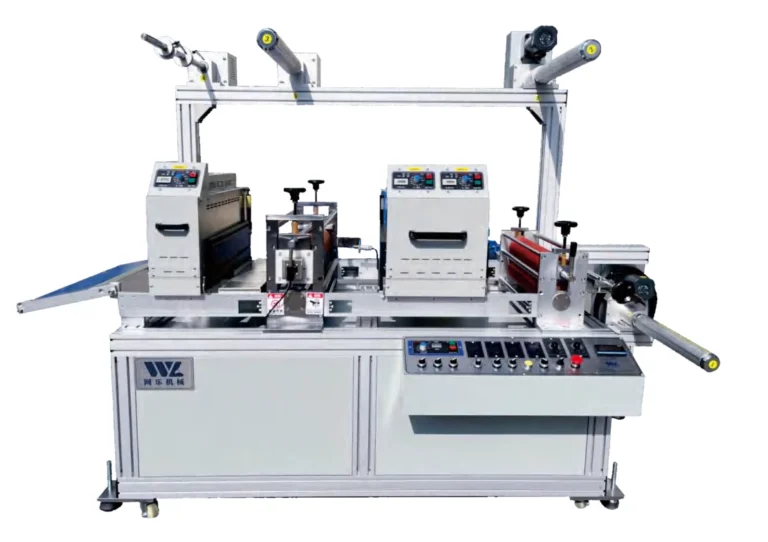
WL-350-LTJ
WL-350-LTJ Horizontal Cold Foil Stamping Machine
Horizontal cold foil stamping for webs up to 350 mm wide, with UV drying, foil supply and waste shafts, and rewinding. Listed foil speed: 0–15 m/min.
View WL-350-LTJ details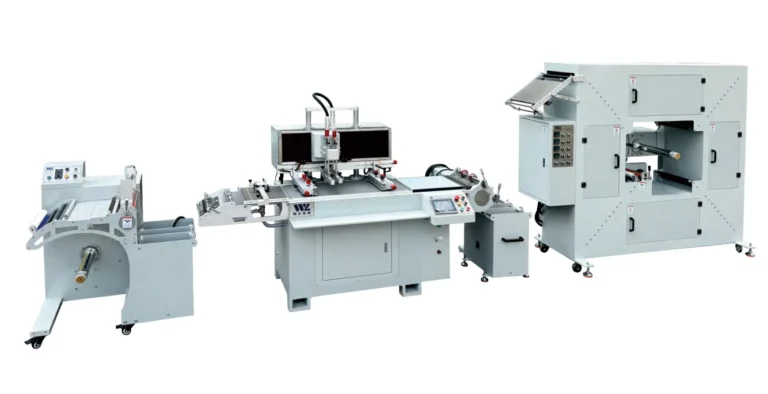
WL-350D
WL-350D Left-Feed Screen Printing Machine with Drying Oven
Left-feed, single-color screen printing with a drying oven for roll-fed labels, offering a 330 × 450 mm print area and a 350 mm maximum web width.
View WL-350D details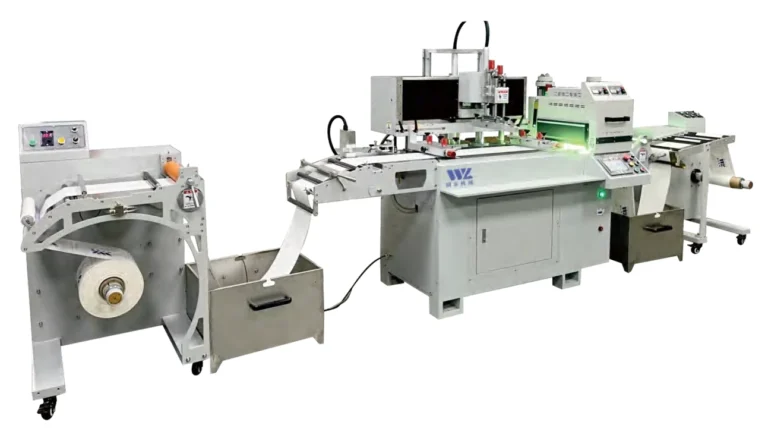
WL-350D
WL-350D Single-Color UV Roll-to-Roll Screen Printing Machine
This WL-350D is the single-color UV roll-to-roll configuration for labels. The catalogue lists a 350 mm maximum web width, a 330 × 450 mm maximum print area and a two-lamp…
View WL-350D details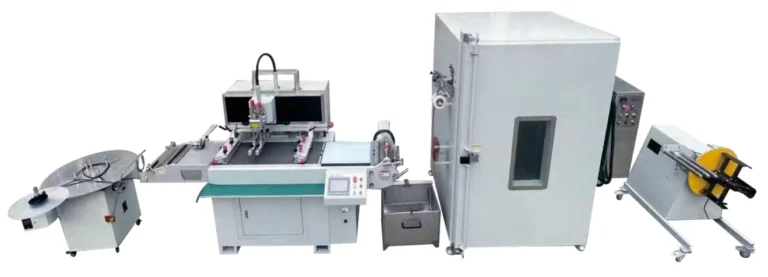
WL-350D
WL-350D Steel Plate Screen Printing Machine with Drying Oven
WL-350D steel plate screen printing configuration with right-feed, single-color printing, a 330 × 450 mm print area and a spring-type conveying oven.
View WL-350D details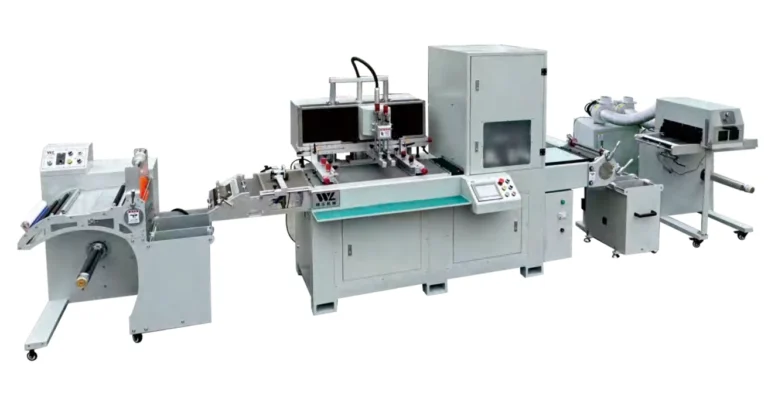
WL-350D-CK-3D
WL-350D-CK-3D Magnetic Effect UV Screen Printing Machine
Single-color screen printing with magnetic control and two-lamp UV drying for magnetic visual effects, with a 330 × 450 mm maximum print area.
View WL-350D-CK-3D detailsNeed help choosing a machine family?
Compare material format, registration, curing and foil requirements in the screen printing machine selection resources. Use the checklist there to prepare the material and artwork details before shortlisting a model.