

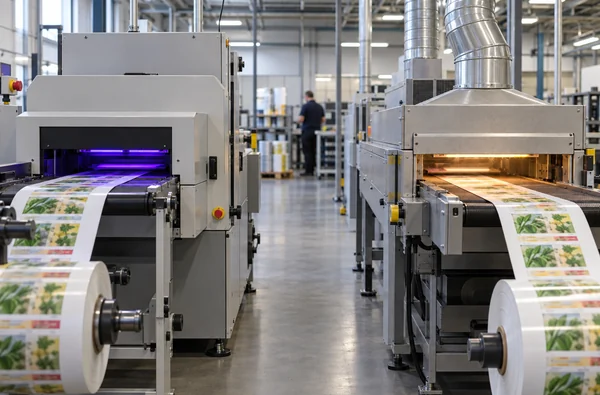
UV Curing vs Hot-Air Drying for Screen Printing
Start here: Choose UV curing or hot-air/oven drying for screen printing from the ink system and the actual substrate, then test the full printed construction. UV-curable ink requires a compatible curing arrangement. An oven-equipped line needs drying conditions that work with the ink and material. The presence of a lamp or an oven in a model name does not settle adhesion, material stability or the finished product’s performance.
Begin with the ink data and the finished part
Ask the ink supplier for the process guidance for the exact ink and any adhesive or coating in the job. Note the intended screen deposit, colors, substrate and subsequent operations. If the material will be die cut, laminated, wound tightly or exposed to another print pass, inspect a sample after that operation. A surface that appears dry at the machine exit may still cause problems later in the line.
Do not choose a dryer solely because the face material is called “PET” or “paper.” A label construction may include a coating, adhesive and liner, while a specialty film may already carry print or treatment. Send production samples. If no consumable has been selected, write that into the inquiry and ask for a process trial rather than a guessed temperature or exposure setting.
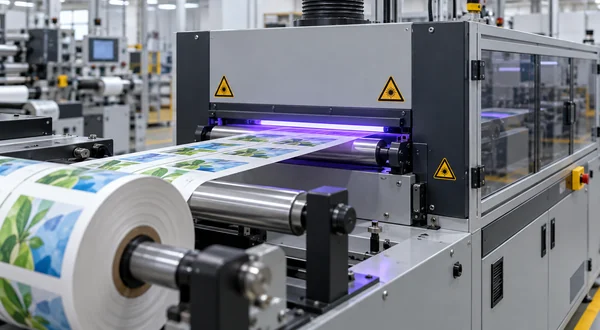
Compare the two routes using the same questions
| Decision point | UV-equipped configuration | Hot-air or oven-equipped configuration |
|---|---|---|
| Consumable | Confirm ink or adhesive is intended for the proposed UV process and printed layer. | Confirm ink supplier drying conditions and the proposed airflow or oven path. |
| Material | Trial the full substrate construction under the proposed exposure and transport conditions. | Trial the full construction for dimensional and surface changes along the drying path. |
| Line sequence | Identify whether a cure is needed between colors, before foil or before rewinding. | Identify drying stages, material travel, cooling and the next operation. |
| Installation | Ask for the quoted lamp arrangement, shielding and electrical requirements. | Ask for oven layout, ventilation, utilities and floor-space requirements. |
| Acceptance | Check the agreed cure, adhesion and downstream performance on samples. | Check drying, adhesion, material stability and downstream performance on samples. |
There is no honest universal answer to “Which is faster?” without an ink, deposit, substrate and line layout. A quote can compare production conditions for your job. A generic speed number cannot.
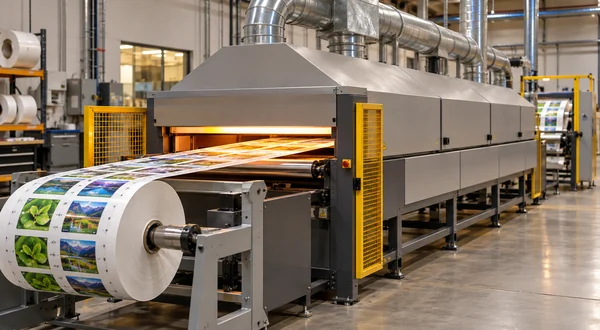
Similar model names can hide different drying equipment
The WL-350D UV is listed as a single-color roll-to-roll screen printer with a two-lamp UV dryer, a 350 mm maximum web width and a 330 × 450 mm maximum print area. The WL-350D oven version is a separate left-feed, single-color configuration with a drying oven. The common model number does not make their dryer scope interchangeable.
The same distinction appears in the two-color WL-5045S UV version and WL-5045S oven version. Both list a 500 mm maximum web width and 500 × 450 mm maximum print area, but the published drying arrangements differ. Compare the exact product page and ask for a line drawing showing every dryer in the proposed quotation.
Write a trial plan before comparing samples
- Fix the materials. Use the production substrate, ink, coating and liner where available. Record the supplier and product identifier for each consumable.
- Fix the artwork. Include the heaviest deposit and any fine detail likely to challenge the process. A small, easy image may conceal a problem in the production design.
- Fix the sequence. List each print, intermediate cure or dry, foil or finishing step and rewind or stack step. Test the sequence you intend to run.
- Agree the checks. State how adhesion, visual appearance, dimensional stability and downstream handling will be judged, and who will accept the result.
- Keep the setup record. Retain the accepted sample and the equipment configuration used. Transfer those details to the written scope of supply.
When two routes both produce an acceptable sample, compare the complete installation rather than only the print unit. Utilities, ventilation, available space and existing equipment can decide which proposal is practical for a specific factory.
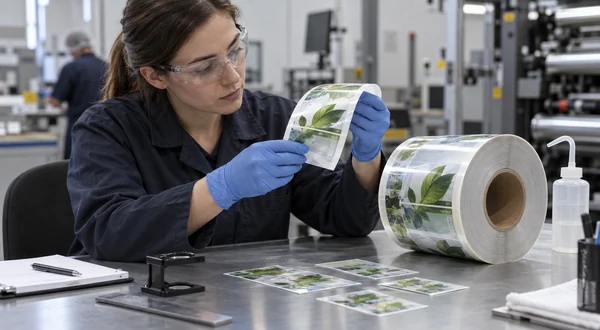
What to record when a trial goes wrong
A rejected sample is still useful if the team records what failed and where. “Poor quality” is too vague to guide a second trial. Note whether the problem appeared immediately after printing or only after rewinding, rubbing, die cutting or storage. Keep samples from each stage and record the material and ink batch used. This helps the ink supplier and equipment team review the same evidence.
| Observed result | Information to capture before changing the setup |
|---|---|
| Image marks or transfers during handling | When contact occurred, the printed layer, winding or stacking condition and the dryer settings used in the trial. |
| Poor adhesion in the customer’s test | The test method, substrate treatment, ink identifier, time between printing and testing, and the accepted reference sample. |
| Material changes dimension or shape | Measurements before and after the drying path, web tension or sheet handling, and the location of the change. |
| A second color or finish causes trouble | The order of operations, condition of the first layer before the next pass and the exact point where the defect first appeared. |
These observations do not diagnose the cause by themselves. They make the next controlled trial possible. Change one documented condition at a time with the consumable supplier and machine team, then compare against the same acceptance method.
If thermal drying is already the intended route, use the roll-fed film oven comparison to separate pre-shrink, inline drying and constant-tension configurations before requesting a sample trial.
Questions that prevent a mismatched quotation
1. Can I replace an oven with UV lamps on the same job?
Only after the ink system and material have been reviewed and tested for the UV process. The two listed machine variants are separate configurations; a change of dryer can also change the line layout and consumables.
2. Does UV always keep a heat-sensitive film safe?
Do not make that assumption. Evaluate the complete material under the proposed lamp, exposure and transport conditions. The product page alone does not establish compatibility with a particular film.
3. What if the sample looks good immediately after printing?
Inspect it after the next real process step: rewinding, lamination, die cutting or another print pass. That result is closer to the finished product you intend to sell.
4. Does a similar printer model name mean the dryer is interchangeable?
No. Read the exact product configuration and ask for a line drawing that identifies the installed curing or drying equipment. The ink, material and available floor space must be reviewed for that specific setup.
5. What consumable information should I send before choosing a dryer?
Provide the production substrate and the ink supplier’s process data, including the intended print deposit and any required post-process tests. If an adhesive, coating or earlier print is already on the stock, include those details too. They may affect how the whole construction responds to the proposed process.
6. How do I check a cured roll after rewinding?
Take samples from the beginning, middle and end of the trial roll and inspect blocking, adhesion and surface appearance after the normal dwell time. Then run the downstream conversion step that the real job requires. Record the line settings so a good result can be reproduced.
7. What should I compare besides the dryer purchase price?
Compare the complete line length, utilities, ventilation needs, consumables and the handling path for the material. Ask what is included in the quotation and what must be supplied by your factory. Base the choice on an accepted sample and the installed configuration, not the dryer label alone.
Include ink data, material samples and a process sketch in the RFQ checklist. See the drying and web-handling family if the dryer must also integrate with an existing line.
The model distinctions above follow the linked Winshol pages and supplied catalogue. No universal curing temperature, time, line speed or material compatibility is asserted.
